

Most people who want to start a swim school already know the demand is real. Parents are actively searching for lessons, waitlists at established schools run months long in many cities, and the average student stays enrolled for 18–24 months once they find a school they trust. What's less obvious is exactly what it takes to get from "this is a great idea" to a functioning business with water in the pool and students in lanes. This guide walks through every major decision - pool setup, startup costs, licensing, hiring, pricing, and operations - so you can plan with real numbers instead of guesses.
Step 1: Decide on Your Pool Model Before You Do Anything Else
Your pool situation determines almost everything else about your business - your startup costs, your schedule, your capacity, and your risk level. There are three realistic models, and the right one depends entirely on your capital and where you are in the business.
Renting lane time or a pool facility is the lowest-risk way to start. Community recreation centers, YMCAs, hotel pools, and private aquatic clubs will often rent lane time for $50–$125 per hour (rates vary by location and usage type). You pay only for the hours you use, you don't own any equipment, and your capital requirement to launch drops dramatically.
The tradeoff: you don't control the schedule, the water temperature, or what happens when the facility has a conflict. Many successful swim schools start this way and stay this way permanently, especially those operating in urban areas where facility costs are prohibitive.

Leasing a dedicated aquatic facility is the middle path. Monthly lease rates for a dedicated pool space run $8,000–$15,000/month depending on location. You control the schedule completely, can brand the space, and build a consistent family experience.
This is the model most mid-sized independent swim schools operate on. Expect to spend $30,000–$80,000 on build-out, equipment, and the first few months of rent before revenue covers costs.
Building your own pool is only worth considering once you've proven demand and have the capital. Pool construction alone runs $250,000+, plus HVAC, filtration, locker rooms, safety systems, and ongoing maintenance. The total facility investment for a purpose-built swim school typically lands between $400,000 and $900,000. Unless you have investors or a franchise backing you, don't start here.
For most first-time swim school operators, the right answer is to start with rented lane time, validate your model, build a waitlist, and upgrade to a leased facility once you have consistent enrollment.
Step 2: Write a Real Business Plan - One You'll Actually Use
A business plan doesn't need to be 40 pages. It needs to answer four questions clearly:
- How much does it cost to run this business each month?
- How many students do I need to break even?
- What does realistic growth look like in years 1–3?
- And where does the startup capital come from?

Estimate your monthly operating costs first
For a pool-rental model in a mid-sized city, a reasonable baseline looks like this:
- Lane rental ($2,000–$4,000/month)
- Instructor wages ($3,000–$8,000/month depending on class load)
- Insurance ($200–$400/month)
- Marketing ($500–$1,000/month to start)
- Software/admin tools ($200–$400/month)
- Monthly floor at roughly $6,000–$14,000 before you pay yourself.
For a leased facility:
- $8,000–$15,000/month in rent.
- Utilities, pool chemicals ($500–$1,000/month), equipment maintenance, and a part-time admin.
- Monthly overhead for a leased facility typically runs $20,000–$40,000+ before factoring in payroll.
Then calculate your break-even enrollment
If your monthly overhead is $15,000 and you charge $99/month per student for group lessons, you need 150 students enrolled just to break even. That's not a large school - it's about 6–8 classes running with 20 students each. Once you know your break-even number, you can work backward to figure out how many classes to schedule, what your lane-time requirements are, and how fast you need to grow.
Budget your startup costs carefully
For a pool-rental model, realistic startup costs run $10,000–$50,000, covering licenses and permits ($500–$3,000), liability insurance deposit, marketing to fill your first cohort, swim equipment (kickboards, noodles, floats - budget $1,000–$3,000), and three months of operating expenses as a buffer. A leased facility model adds build-out, signage, and upfront rent deposits, typically pushing startup costs to $100,000–$300,000+.
Step 3: Register the Business and Get the Right Permits
This step is unglamorous but non-negotiable. Operating without the right permits creates liability exposure that can shut you down on day one.
Business registration is your first task. Register your business entity (typically an LLC for liability protection) with your state. Cost is usually $50–$500 depending on state.
Aquatic facility permits are required by most states and municipalities. These typically include a health department permit, a pool operation permit (if you're leasing a dedicated facility), and possibly a local aquatic safety permit. Permit costs range from $500–$3,000 total and may require an inspection before you open. Contact your city or county health department early - turnaround times vary and some permits require 60–90 days to process.
Business licenses at the city or county level are separate from state registration. If you're operating in multiple locations, you'll need a license for each jurisdiction.
Insurance is not optional. You need at minimum: general liability coverage (typically $500–$1,500/year for a small operation), commercial aquatic liability (which covers incidents in the water - this is different from standard GL), and workers' compensation once you hire employees. Budget $2,000–$5,000/year for a comprehensive insurance package when starting out.
One important note: if you're renting pool space from another facility, confirm what their insurance covers and what you're responsible for. Don't assume their coverage protects your business.
Step 4: Hire and Certify Your Instructors
The quality of your instructors is the single biggest factor in whether families stay enrolled or leave. A parent who sees their child gain real confidence in the water will re-enroll for years. A parent who feels the instructor was inattentive will not come back.
.jpg)
Certifications matter - and should be non-negotiable for your staff
The American Red Cross Water Safety Instructor (WSI) certification is the industry standard. It qualifies instructors to teach all swimming and water safety levels across all age groups, and it's valid for two years. The prerequisite is that candidates must be at least 16 years old and demonstrate swimming competency through Level 4 strokes. For instructors working only with young beginners, the Red Cross Basic Swim Instructor (BSI) certification covers Levels 1–3 and parent-and-child programming.
Beyond formal certification, look for instructors who genuinely like working with kids and can communicate with parents clearly. Technical swim ability matters less than teaching ability and patience with fearful or reluctant children.
Pay your instructors competitively
Instructor wages typically consume 30–40% of gross revenue in a healthy swim school. In practice, most swim instructors earn $18–$30/hour. For a school grossing $20,000/month, that means $6,000–$8,000/month going to instruction — plan for this from day one. If you underpay, you'll lose your best instructors to the YMCA or a competitor.
Step 5: Build Your Curriculum and Level Structure
A clear level structure is what separates a professional swim school from an informal lessons operation. Parents want to see their child progress, and they want to know what that progression looks like before they enroll.

Most swim schools use a 6–8 level structure that moves students from water acclimation and floating (infant/toddler levels) through basic stroke development, proficiency, and eventually competitive readiness. The American Red Cross and YMCA both publish established progressions you can adapt, or you can build your own.
Define each level clearly: what skills does a student need to enter, and what does passing look like? If a child needs to swim 25 meters of freestyle unassisted to advance to Level 4, write that down. Clear advancement criteria make promotions feel earned, reduce parent complaints, and give instructors consistent benchmarks to teach toward.
Class groupings should factor in both skill level and age. A 4-year-old at Level 1 learns very differently than an 8-year-old at Level 1. Where possible, run age-appropriate sections rather than mixed-age classes at the same level.
Step 6: Set Your Pricing Structure
Group lessons are the backbone of most swim school revenue. In the U.S., weekly group lessons (30–45 minutes) run $85–$130/month. Semi-private lessons for two or three students typically generate $150–$200/month per student. Private lessons run $70–$110 for a 30-minute session.
A few pricing principles worth keeping in mind:
- Start with your costs, not what competitors charge.
- If running a weekly group class costs you $25 per student in overhead and instructor time, pricing at $90/month for four sessions gives you a workable margin.
- If you price at $70 because the school across town charges that, you may be operating at a loss without knowing it.

Use a monthly tuition model rather than per-class pricing wherever possible. Monthly enrollment creates predictable revenue, commits students to a term, and reduces the administrative friction of collecting payment class-by-class. It also signals that you're running a structured program, not drop-in lessons.
Charge a registration fee ($30–$60) at enrollment. This is standard practice and helps cover your administrative costs at the start of each season or term.
Step 7: Fill Your First Classes - Before You Open

Don't wait until you have everything perfect before you start building an audience. The schools that fill quickly do two things: they collect leads early, and they offer a compelling trial experience.
Start a waitlist as soon as you have a launch date
A simple landing page with your location, class schedule, and an email capture form is enough. Promote it through neighborhood Facebook groups, local parenting forums, Instagram, and by talking to parents at playgrounds, daycares, and pediatric offices. Families looking for swim lessons are not hard to find - they're actively looking.
Offer a trial class at a discounted or free rate for your launch cohort
Trial students who experience a well-run lesson almost always enroll. A class where the instructor remembers the child's name, gives specific feedback, and ends with a clear explanation of what level they're in and what comes next will convert at a high rate. Your first 20–30 families are your most important marketing asset — they will refer others if you give them a reason to.
Build relationships with local schools and pediatricians
School newsletters and pediatric waiting rooms are underused channels for swim schools. A flyer that says "Water safety is a life skill - here's where to start" in a pediatrician's office reaches exactly the right audience.
Step 8: Set Up Your Operations Before Day One
Running a swim school with spreadsheets and text messages works for five students. It doesn't work for 50, and it definitely doesn't work for 150. The operational overhead - enrollment, payment collection, attendance, make-up class scheduling, parent communication, progress tracking - compounds fast as you grow.
Software built for the academy model (students, levels, terms, progression) handles this much more cleanly than general fitness booking tools. Classcard, swim school management platform covers online registration with customizable enrollment forms (including parent/guardian details, medical notes, and waivers with e-signatures), automated payment collection, attendance tracking, make-up class workflows, student progress tracking with customizable rubrics, and a branded parent-facing app - all without requiring parents to download anything from an app store. At $99/month with a 7-day free trial, it's worth setting up before your first class so you're not retrofitting your data later.
The specific things to configure before you open:
- Your level structure and class assignments
- Your enrollment forms (especially waivers - don't skip these)
- Your payment processing, and your trial class booking flow. Parents who can self-book a trial online convert at a higher rate than those who have to call or email to schedule one.
For a full walkthrough of managing a swim school day-to-day after you're open, this guide to swim school management and growth covers retention, capacity planning, and scaling your program.
What to Expect in Year One
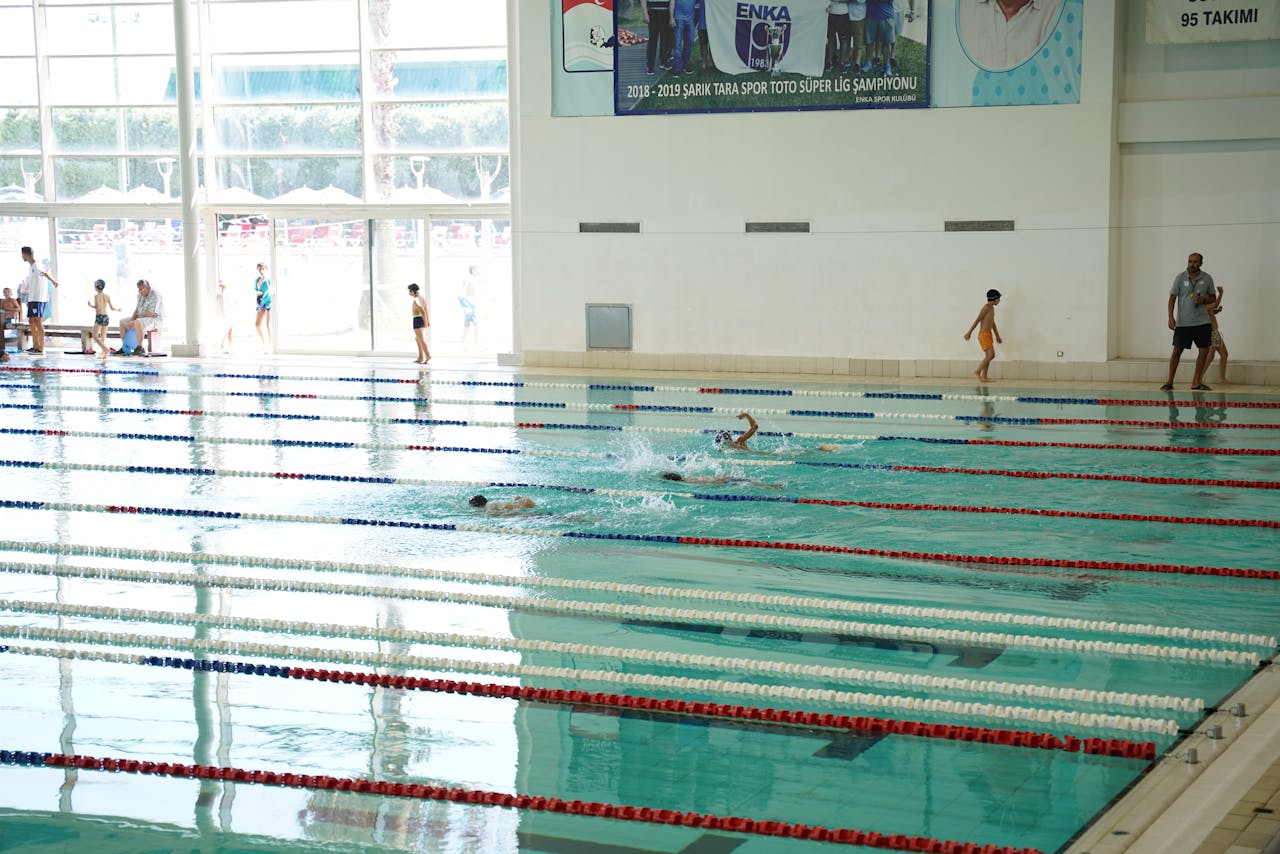
Most swim schools don't break even in their first year, and that's not a failure - it's math. Building enrollment takes time. If you start with rented lane time and 30 students, you're generating $2,700–$3,900/month in tuition against $6,000–$10,000 in operating costs. You're losing money in the short term to build something with long-term recurring revenue.
The economics get significantly better between months 6 and 18. Students renew. Referrals come in. You add class sections without adding much overhead. A swim school with 100 enrolled students paying $99/month is a $120,000/year gross revenue business. With 200 students, you're at $240,000. At 30–40% net margin for a lean operation, that's a real business.
Set a clear milestone for your first year: reach break-even enrollment by month 6, and reach 1.5x break-even by month 12. If you're tracking enrollment, retention, and revenue per class carefully, you'll know early whether you're on track - or whether you need to adjust pricing, marketing, or class scheduling before the numbers get worse.
If you're ready to set up your enrollment and class management before your first session, schedule a free demo or try Classcard free for 7 days.
Frequently Asked Questions
How much does it cost to start a swim school?
Starting a swim school costs anywhere from $10,000–$50,000 for a pool-rental model to $100,000–$300,000+ for a leased dedicated facility. The biggest variable is whether you rent existing pool space or take on a dedicated facility lease. Pool construction for a purpose-built school runs $400,000–$900,000 in total startup costs - this is not where most independent operators should start.
Do swim school instructors need to be certified?
Yes. The American Red Cross Water Safety Instructor (WSI) certification is the industry standard for swim instructors and qualifies them to teach all age groups and ability levels. It requires candidates to be at least 16 years old, demonstrate competency in six competitive strokes, and is valid for two years. For instructors working only with beginners and young children, the Basic Swim Instructor (BSI) certification covers Levels 1–3.
How many students do I need to break even?
It depends on your cost structure. A pool-rental operation with $10,000/month in overhead and $100/month group lesson pricing needs 100 enrolled students to break even. A leased facility with $30,000/month in overhead needs 300 students. Calculate your specific break-even number before you open - it's the most important number in your business plan.
What licenses and permits does a swim school need?
At minimum, you'll need a state business registration (LLC), a local business license, and a health department permit. If you operate a dedicated pool facility, you'll also need a pool operation permit, which typically involves a safety inspection. Total licensing costs usually run $500–$3,000. Start this process 60–90 days before you plan to open - some permits take time.
How do I find students for a new swim school?
Start building a waitlist before you open using a simple landing page and social media. Neighborhood Facebook groups, local parenting forums, and flyers at pediatric offices and daycares are effective low-cost channels. Offering a trial class for your first cohort converts well - families who experience a good lesson almost always enroll. Your first 30 families are your best marketing: if you deliver a great experience, they'll refer friends.
What software do swim schools use to manage enrollment and payments?
Swim schools that grow past 50–60 students typically need purpose-built class management software. Tools like Classcard are designed for the academy model - handling online registration, waivers, payment collection, attendance, make-up class workflows, student progress tracking, and parent communication in one place. For more guidance on what to look for, read The Ultimate Guide to Choosing Swim School Management Software.