

You didn't open a dance studio because you love spreadsheets. You opened it because you love dance, and you wanted to share that with your community. But somewhere between teaching back-to-back classes, chasing late payments, and answering the same WhatsApp messages at 11pm, the business side started consuming the part you actually enjoy.
The frustrating truth is that most dance studios don't lose students because of bad teaching. They lose them because of operational mistakes that are entirely fixable, things like slow follow-ups, confusing registration, inconsistent communication, and pricing structures that accidentally push families away.
Here are seven of the most common dance studio management mistakes, why they cost you students, and what to do instead.
1. Letting Trial Students Slip Away Without Follow-Up
A family brings their child in for a trial class. The child has a great time. The parent seems impressed. They leave saying "we'll think about it", but you never hear from them again.
This is the single most expensive leak in most dance studios. The trial class itself did its job. But without a structured follow-up within 24-48 hours, the momentum fades. The parent gets busy, another activity captures their attention, and your studio becomes "that place we tried once."
Why it happens
Most studios rely on someone remembering to follow up - a mental note, a sticky note on the front desk, a WhatsApp message that gets buried under 50 others. There's no system, no trigger, no deadline. When the studio is busy (which is exactly when you're getting the most trial students), follow-up is the first thing that falls through the cracks.
What to do instead
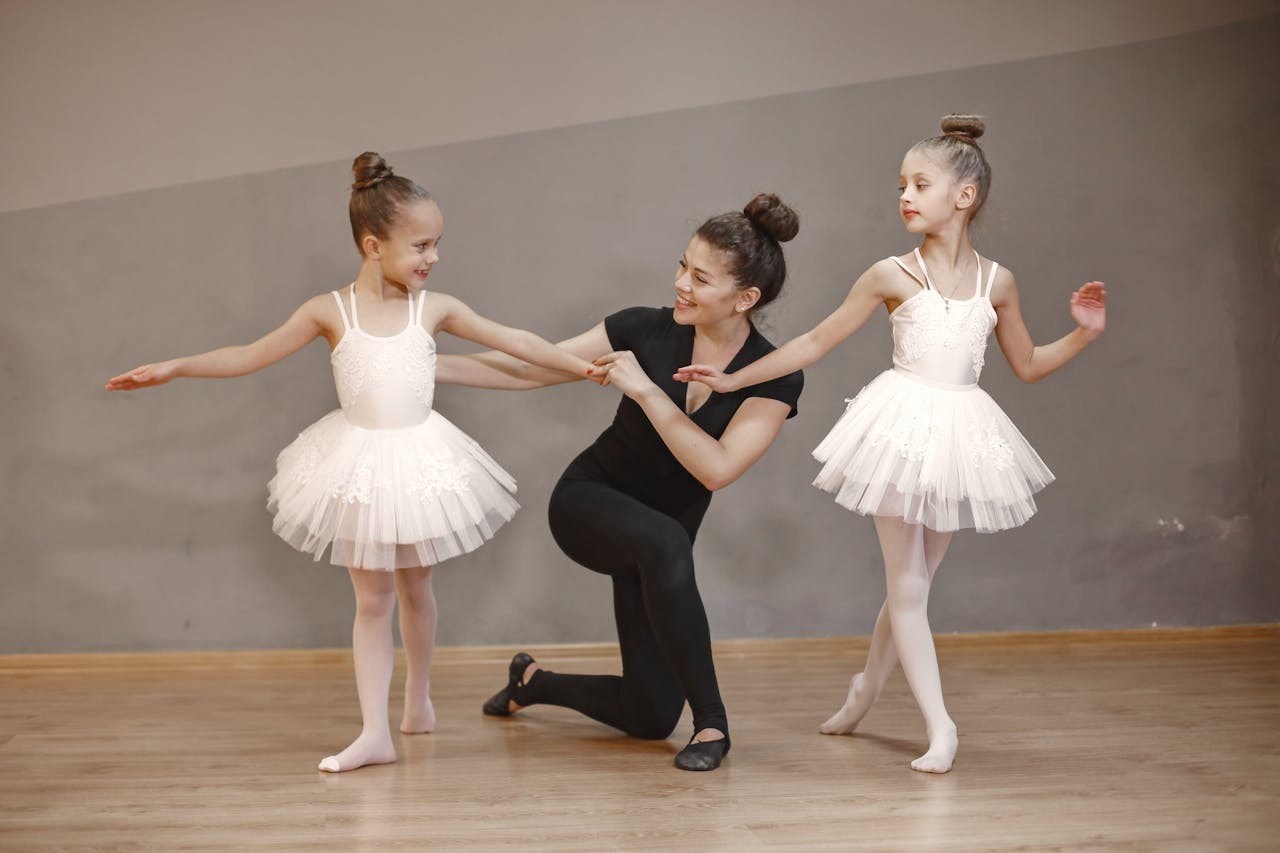
Build an automatic post-trial workflow. The moment a trial class is attended, two things should happen without any manual effort: a thank-you email goes out to the parent within a few hours (while the experience is fresh), and a follow-up task is created for a staff member the next morning with a specific prompt ("Call Sarah's mum about enrolling in Saturday ballet"). This isn't about being pushy, it's about being professional and responsive at the moment when a family is most likely to say yes.
If you're just starting out and building these systems from scratch, our guide to starting a dance studio covers the full operational setup.
2. Making Registration Harder Than It Needs to Be
You'd be surprised how many dance studios still handle enrollment through a combination of PDF forms, email attachments, bank transfers, and WhatsApp confirmations. Some require parents to physically come to the studio to register. Others have an online form but still need a separate payment step.
Every friction point in your registration process is an exit point. A parent who's excited to enroll their child after a great trial class will cool off quickly if they need to download a form, print it, fill it in, scan it, email it back, and then wait for a payment link.
Why it happens
Studios often build their registration process incrementally - starting with a paper form when they had 10 students, adding a Google Form at 30, tacking on a payment link at 50. By the time they have 80 students, the process is a patchwork of tools that no one has stepped back to simplify.
What to do instead
Consolidate registration into a single step. A parent should be able to find your studio online, browse available classes, select the one they want, fill out all required information (child's details, guardian contacts, emergency info, any medical notes, waiver signature), pay, and receive confirmation, all in one flow, preferably on their phone, in under five minutes. If your current setup requires more than one tool or more than one step to go from "interested" to "enrolled and paid," it's costing you students.

3. Undercharging (or Overcomplicating Your Pricing)
Pricing is one of the most anxiety-inducing decisions for dance studio owners. Charge too much and you fear losing families. Charge too little and you can't afford to invest in better facilities, costumes, or staff. But the bigger mistake isn't the number itself, it's how you communicate it.
Studios that bury their pricing, make parents call or email to get a quote, or present 12 different options (per-class, per-term, per-month, sibling discount, early bird, loyalty rate, multi-class bundle) end up confusing families instead of converting them.
Why it happens
Many studio owners set their pricing based on what competitors charge rather than on what their business actually needs to sustain itself. They add discounts reactively (a sibling discount because a parent asked, an early-bird rate because enrollment was slow one term) until the pricing structure becomes a maze that even staff can't explain clearly.
What to do instead
Simplify to 2-3 clear options. A per-term rate (your standard), a multi-class discount (for families enrolling in more than one class), and perhaps a sibling discount. Make pricing visible on your website and booking page. Parents shouldn't need to message you to find out what a class costs. Transparent pricing builds trust and reduces the back-and-forth that slows down enrollment.

For a detailed breakdown of pricing models and benchmarks, see our guide to dance class pricing.
4. Relying on WhatsApp as Your Communication System
WhatsApp is brilliant for quick, informal messages. But as your studio's communication backbone, it’s not so great.
When class schedules, payment reminders, make-up class arrangements, recital updates, and parent queries all live in WhatsApp threads, three things happen. First, important information gets buried under casual messages. Second, only the staff member in the chat knows what's going on; if they're sick or on leave, the context disappears. Third, you end up answering the same questions over and over ("What time is the Saturday class?" "When is the next term starting?" "Can my daughter do a make-up class?") because there's no central place for parents to find this information themselves.
Why it happens
WhatsApp is where your parents already are. It feels natural and personal. And when you had 15 students, it worked. But it doesn't scale, and most studio owners don't notice the problem until they're drowning in messages across 8 group chats and 40 individual conversations.
What to do instead
Use WhatsApp for what it's good at: personal, human communication. But move operational communication (schedule updates, payment reminders, enrollment confirmations, make-up class bookings) into a system that handles it automatically. When parents have a portal or app where they can check schedules, view their payment history, and book make-up classes themselves, the volume of repetitive WhatsApp messages drops dramatically. Your conversations become more personal, not less, because you're no longer spending all your time on logistics.

5. Not Tracking Attendance (or Not Acting on It)
Attendance tracking in many dance studios means a paper register, a mental headcount, or nothing at all. And even studios that do track attendance rarely look at the data.
Here's why this matters: a student who drops from attending every week to attending every other week is showing you, in data, that they're about to leave. Maybe the class time no longer works. Maybe they're losing interest. Maybe the parent is frustrated about something. Whatever the reason, by the time they formally withdraw, the window to save them has already closed.
Why it happens
Tracking attendance feels like an administrative burden when you're the one teaching the class. You're focused on the students in front of you, not on who's missing. And without a system that flags attendance patterns automatically, the data — even if you're collecting it — sits unused.
What to do instead
Track attendance digitally (even a simple app-based check-in works) and set up a process to review it weekly. Look for two patterns: students whose attendance has dropped over the past 3-4 weeks, and students who haven't attended at all in the past 2 weeks. A quick, personal check-in ("Hi! We've missed Ella in class the last couple of weeks. Is everything okay?") can often surface a solvable problem before it becomes a lost student. This isn't surveillance, it's care. And parents notice when a studio pays attention.
.jpg)
6. Ignoring the Parent Experience
Here's something that's easy to forget when you're passionate about dance: for most of your students (especially younger ones), the enrollment decision isn't made by the student. It's made by the parent. And the parent's experience of your studio is very different from the dancer's.
The parent experience includes how easy it is to find class information, how smooth registration is, whether they know what their child is learning and how they're progressing, how payments are handled, how quickly their questions get answered, and how welcomed they feel in the studio environment.
Studios that invest everything into the in-class experience (excellent choreography, beautiful facilities, skilled instructors) but neglect the parent experience often find themselves losing families to studios that are objectively less impressive as dance schools but far easier to deal with as businesses.
Why it happens
Dance studio owners are dancers and teachers at heart. The in-studio experience is what they know, love, and obsess over. The "business experience" — invoicing, communication, progress updates, scheduling — feels like a necessary chore rather than a competitive advantage.
What to do instead
Think of the parent as your actual customer and design their experience as intentionally as you design your classes. Give them visibility into what their child is learning and how they're progressing; even a simple end-of-term progress note or class feedback makes a huge difference. Make sure they can access schedules, make payments, and manage bookings without needing to message you. When parents feel informed, respected, and included, they're far more likely to stay, and to recommend your studio to other families.
7. Trying to Do Everything Yourself
The final mistake is perhaps the most common and the hardest to fix: the studio owner who teaches every class, handles every enrollment, chases every payment, manages every communication, and makes every decision because "no one else can do it the way I do."
This isn't a management strategy. It's a bottleneck. And it has a direct cost: when the owner is overwhelmed, response times slow down, follow-ups get missed, admin piles up, and the quality of everything, including teaching, starts to suffer. Students and parents notice.
Why it happens
Most dance studios start as one-person operations. The owner is the teacher, the admin, the marketer, and the cleaner. Those habits are hard to break even as the studio grows, especially when delegating feels risky or hiring feels premature.
What to do instead
You don't necessarily need to hire more staff. You need to automate and systematize the tasks that don't require your personal touch. Payment reminders shouldn't need a human. Enrollment confirmations shouldn't need a human. Class reminders shouldn't need a human. Trial follow-ups shouldn't need a human. Post-class feedback requests shouldn't need a human.
When you automate the repetitive operational tasks, you free up hours every week; hours you can spend teaching better classes, building relationships with families, planning recitals, or simply not working at 10pm on a Sunday night.
A Quick Self-Check: How Many of These Apply to You?
Be honest:
□ Trial follow-up: Do you have an automatic system that follows up with every trial student within 24 hours, or does it depend on someone remembering?
□ Registration: Can a parent go from "interested" to "enrolled and paid" in one step, on their phone, or does it take multiple tools and manual steps?
□ Pricing clarity: Can a parent find your pricing on your website or booking page right now, or do they need to message you?
□ Communication: Are schedule changes, payment reminders, and class updates sent automatically, or does a staff member type each one manually?
□ Attendance: Do you review attendance data weekly and reach out to declining students, or do you only notice when they stop showing up entirely?
□ Parent experience: Can parents see their child's progress, check schedules, and manage payments through a portal or app, or is everything handled through WhatsApp and phone calls?
□ Delegation: Are repetitive admin tasks automated, or are you personally handling every payment reminder, enrollment confirmation, and schedule change?
If you checked more than two or three of these, you're likely losing students to operational gaps rather than competitive ones. The good news is that every one of these problems is solvable, and most of them can be solved with the right systems rather than more staff hours.
Fixing the Leaks
None of these mistakes are about bad teaching or lack of passion. They're about operational systems that haven't kept pace with your growth. And they're exactly the kind of problems that a purpose-built class management platform is designed to solve.
Classcard is built for dance studios and academies — handling lead management, trial class tracking, automated follow-ups, online registration with payments, attendance tracking, student progress and feedback, make-up class workflows, and a branded app for parents — all in one platform. If your current setup involves stitching together Google Forms, spreadsheets, WhatsApp groups, and a separate payment tool, it might be time to consolidate.
See how Classcard works for dance studios →

Running a dance studio shouldn't mean drowning in admin. Try Classcard free for 7 days — purpose-built for dance studios, with dedicated onboarding support to get you set up fast.
Frequently Asked Questions
1. How do I retain more students at my dance studio?
Retention starts with consistent communication, easy-to-use systems, and paying attention to early warning signs. Track attendance, follow up when students miss classes, give parents visibility into their child's progress, and make payments and scheduling frictionless.
2. What software do dance studios use?
Dance studios use class management software to handle scheduling, enrollment, attendance, payments, and parent communication. Popular options include Classcard, Jackrabbit Dance, DanceStudio-Pro, and iClassPro. The right choice depends on your studio's size, how many classes you offer, and whether you need features like lead management, progress tracking, and automation.
3. How do I get more trial students to enroll?
The key is speed and consistency in your follow-up. Automate a thank-you message within hours of the trial class, and create a task for a personal follow-up the next day. Make enrollment easy; the parent should be able to sign up and pay immediately, ideally from a link in your follow-up message. Studios that follow up within 24 hours convert significantly more trial students than those that wait 3-5 days or rely on the parent to initiate.
4. How much should I charge for dance classes?
Pricing depends on your location, class type, age group, and competitive landscape. Most studios charge between $12-25 per class for group sessions, with term packages offering a lower per-class rate. The most important thing is to be transparent. Publish your pricing so parents can make informed decisions without needing to contact you. For a detailed breakdown by class type and region, see our dance class pricing guide.