

Games are not a break from learning in a music class. They are often the most effective learning format available, especially for students under ten. A child who claps back a rhythm in a game retains the pattern far more reliably than a child who copies it from notation alone. A student who identifies an instrument by ear during a group activity develops listening skills faster than one who studies it from a worksheet.
The games in this list are designed to be immediately usable in a group music class, preschool through about age twelve, with no specialist equipment beyond what most music studios already have. Each one targets a specific musical skill and works in a typical class period without requiring extensive setup or explanation time.

1. Rhythm Echo Chain
What it builds: Rhythmic memory, listening, and progressively complex pattern recognition.
How to play: The teacher claps a short rhythm pattern, two to four beats, and the class claps it back in unison. This is standard call-and-response. The twist is what happens next: the teacher adds one beat to the pattern before repeating, and students echo the longer version. Over the course of five to eight rounds, the pattern grows until students are clapping and memorizing an eight-to-twelve beat sequence they built together.
Once students are comfortable with the basic format, add a second voice: the teacher claps the original pattern while students layer an echo on top, creating a simple two-part rhythmic texture. For older students, introduce body percussion to differentiate layers: stamps for one rhythmic line, claps for another.
Works best for: Ages five to twelve. Adjust complexity by starting simpler for younger groups. For beginner students, keep patterns in groups of two. For more advanced groups, introduce syncopation and rests.
2. Instrument Detective
What it builds: Ear training, instrument identification, and auditory attention.
How to play: Place three to five instruments out of sight, behind a curtain, a divider, or simply behind the teacher's back. One at a time, play or tap each instrument without students seeing it. Students raise their hand when they think they know which instrument was played, and one student identifies it by name.
For younger students, reveal the full set of instruments beforehand so they are choosing from a visible group. For older or more advanced students, include instruments they have been studying without showing them first, requiring pure auditory identification.
A more challenging variation: play two instruments in rapid succession and ask students to identify which came first and which came second. This develops sequential auditory processing alongside identification skills.
Works best for: Ages five to ten. Particularly effective for reinforcing instrument families, with two or three representatives from each family used in the same round so students hear the tonal difference between a violin, viola, and cello, for example, rather than just identifying a single instrument in isolation.
3. The Conductor's Court
What it builds: Understanding of dynamics, tempo, and expressive musical control.
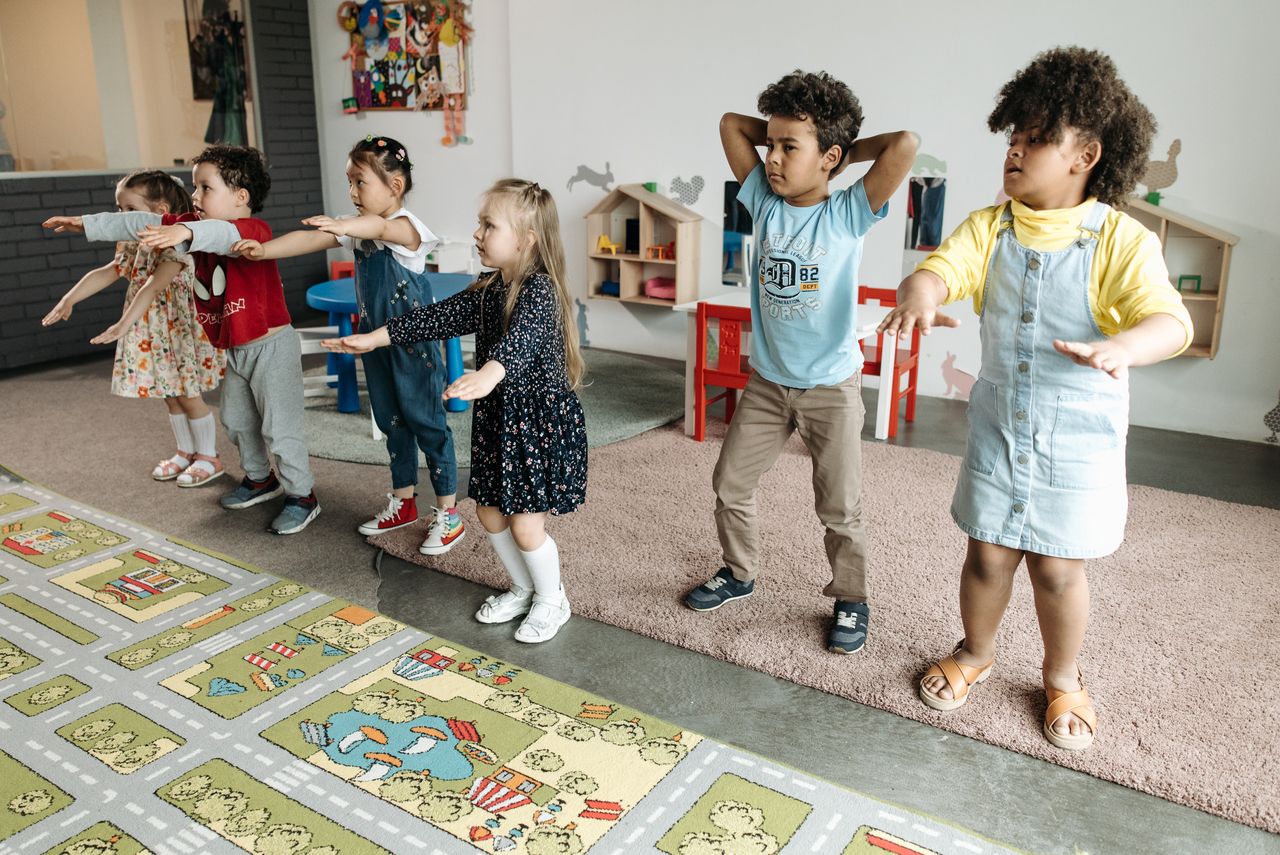
How to play: One student takes the role of conductor at the front of the room. The rest of the class hums a simple, well-known melody or holds a sustained tone. The conductor uses gestures to control the dynamics and tempo of what the class is producing: hands moving apart signal getting louder, hands moving together signal getting softer, a faster arm sweep signals a tempo increase, a slower one signals slowing down.
The class responds in real time to the conductor's signals. Rotate conductors every 60 to 90 seconds so multiple students experience the leadership role. After each conductor's turn, the class briefly discusses what changes they made and how clearly the gestures communicated the intention.
For a more advanced version, give the conductor a set of gesture cards corresponding to specific dynamic and tempo markings (forte, piano, allegro, andante) so students are connecting standard notation concepts to their physical expression.
Works best for: Ages seven to twelve. Younger children can participate as players but the conductor role is more meaningful once students understand basic dynamic and tempo concepts.
4. Solfege Freeze
What it builds: Pitch recognition, solfege vocabulary, and physical engagement with melodic content.
How to play: Students move freely around the space while music plays. When the music stops, the teacher calls out a solfege syllable: do, re, mi, fa, sol, la, or ti. Each syllable corresponds to a body position that the class has agreed on beforehand: do is hands on knees, re is hands on hips, mi is hands on shoulders, sol is hands in the air, and so on. When the syllable is called, students freeze in the corresponding position.
The physical association between a syllable and a body location creates a kinesthetic memory anchor that supports pitch recognition long after the game ends. Students who can physically feel where "mi" lives on their body have a more reliable internal reference than those who have only sung it.
A singing variation: when students freeze, the teacher plays a note on piano or guitar and students identify which solfege syllable it is, then hold the correct position until the next round begins.
Works best for: Ages five to nine. Excellent as a warm-up activity before a lesson that includes solfege singing or ear training.
5. Soundscape Stories
What it builds: Composition, creative listening, timbre exploration, and ensemble coordination.
How to play: The teacher reads a short story aloud, two to three paragraphs is enough, while a small group of students creates a live soundscape using percussion instruments, body sounds, and found objects to match the narrative. Rain sounds might be fingers tapping on a drum head. Thunder might be a bass drum roll. A horse galloping might be alternating palms on knees.
Before the story begins, assign each student one or two sound responsibilities that appear in the text. Read slowly enough that students can respond in the moment. After one full read-through with the soundscape, switch the sound assignment so different students handle different narrative events.
For a more student-led version, give a small group five minutes to prepare their own soundscape for a short scene or story idea they generate together. The class then listens with eyes closed while the group performs it and guesses what story was being told.
Works best for: Ages six to eleven. Works particularly well at the beginning of a unit on timbre, or as a creative extension after students have been introduced to several instrument types.

6. Pass the Beat
What it builds: Steady pulse, ensemble listening, and rhythmic precision.
How to play: Students sit in a circle. The teacher establishes a steady beat, either by tapping or playing a short loop. Students pass the beat around the circle, each person contributing exactly one tap on the beat as it arrives at them: a clap, a knee tap, or a tap on a percussion instrument. The goal is for the beat to travel smoothly around the circle without rushing or slowing.
Start slowly and gradually increase the tempo as the group becomes comfortable. Introduce rests: instead of tapping on their turn, a student can hold their hands up to signal a rest, and the beat skips to the next person on the following beat. This creates a simple rhythmic pattern determined collectively by the group.
For an advanced version, use two beats traveling in the same direction with a gap between them, requiring each student to track two pulses simultaneously and respond to the correct one when it arrives.
Works best for: Ages six to twelve. The game naturally reveals who is feeling the beat internally versus following the external cue of the person before them, which gives the teacher useful diagnostic information.
7. Musical Symbol Bingo
What it builds: Music notation literacy, theory vocabulary, and visual recognition of musical symbols.
How to play: Create simple bingo cards, nine squares in a three-by-three grid, each square containing a music symbol, note name, dynamic marking, or time signature relevant to what the class has been studying. The teacher calls out descriptions rather than symbol names: "a symbol that means very soft," "a note that gets two beats," "the sign that means repeat." Students cover the matching symbol on their card.
Homemade cards with hand-drawn symbols work perfectly. Laminated cards with whiteboard markers allow the cards to be reused across sessions. Alternatively, create the cards digitally and print a new set each time to vary the symbol combination.
The descriptions require students to apply knowledge rather than just pattern-match names to images, which is a more durable form of retention. A student who identifies a pianissimo marking from a description of its meaning knows the concept. A student who identifies it only by its appearance may not.
Works best for: Ages eight to twelve, after students have been introduced to standard notation. Can be simplified for younger students by using only note shapes, clef symbols, and simple dynamic markings.

8. Tempo Machines
What it builds: Internalizing tempo contrasts, expressive movement, and physical awareness of musical pulse.
How to play: Divide the class into groups of three to four. Each group's task is to create a "machine" using only their bodies and voices, where every part of the machine moves and sounds in a repeating pattern. Arm sweeps, claps, stomps, and vocal sounds are all permitted. The machine should have a clear internal rhythm.
Once each machine is assembled and running, the teacher calls tempo markings: "allegro," "andante," "presto." The entire machine adjusts its speed to match the indicated tempo while keeping the same pattern of movements. The machine that best maintains the internal relationship of its parts while changing speed wins the round.
The challenge of maintaining pattern precision at different tempos develops an internal sense of tempo that transfers directly to instrumental practice and ensemble playing.
Works best for: Ages seven to twelve. Introduce the Italian tempo terms beforehand so students can apply them in context during the game. This activity also works well as a transition into discussing tempo markings in written music.
9. Musical Dice Composition
What it builds: Melodic composition, music theory application, and creative decision-making.
How to play: Give small groups of two to three students a set of dice labeled with musical parameters. One die shows note durations: quarter note, half note, eighth note pair, and so on. Another die shows pitch choices within a pentatonic scale (C, D, E, G, A for a C pentatonic group), either as letter names or solfege syllables. A third optional die determines dynamics for that note: forte, mezzo forte, piano.
Students roll the dice in sequence and notate or record each result until they have eight to sixteen notes. The result is a short melodic phrase generated by chance but shaped by musical decisions when the group chooses which roll to keep and which to re-roll.
Groups then perform their compositions for the class. Because every group generates something different, the listening portion becomes a real creative experience rather than a comparison exercise. After a basic version, add a fourth dice parameter: a rest or a tied note, to introduce more complex rhythmic variety.
Works best for: Ages nine to twelve, or younger students in a more advanced theory track. Works best when students have been introduced to note values and pitch names prior to the session.
10. Who Changed the Song?
What it builds: Ensemble awareness, listening within a group, and attention to individual musical voices.
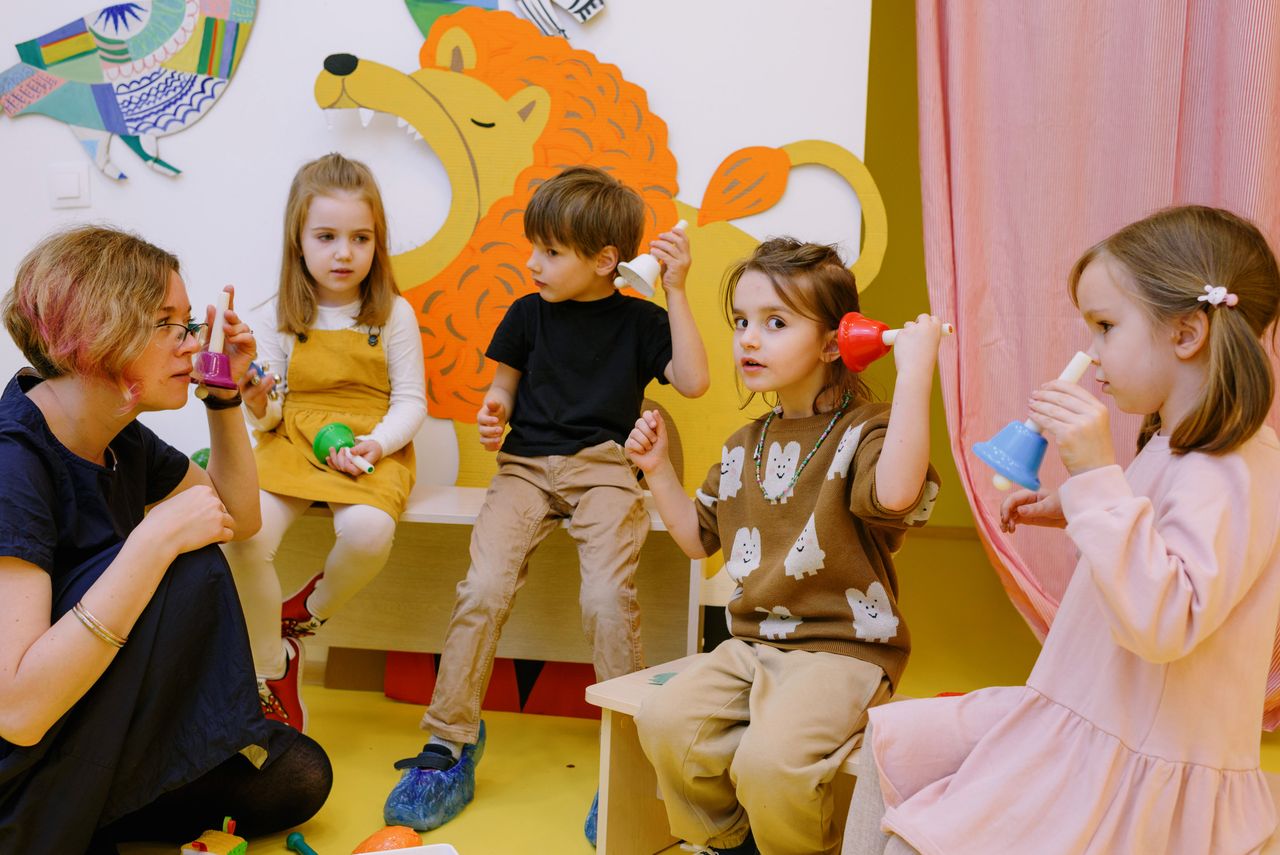
How to play: The class learns a simple song together and sings or plays it through as a group. One student, designated as the detective, closes their eyes or steps briefly out of the room. While the detective is not watching, the teacher silently points to one student in the group who will change something about their contribution: singing a different pitch, changing their volume significantly, using a different vowel sound, or clapping a slightly different rhythm.
The group performs the song again. The detective listens carefully and tries to identify which student changed. After three rounds, rotate both the detective role and the assigned "changer."
The game develops the same listening skill that ensemble musicians use in performance: the ability to track individual voices within a group texture and notice when something is different. Students who play in ensembles or sing in choirs find this skill directly applicable.
Works best for: Ages seven to twelve. Works particularly well in programs with ensemble playing, where listening to fellow musicians is a core skill. The complexity can be increased by having two students change simultaneously, requiring the detective to identify both.
Building Games Into Your Regular Class Structure
Games work best when they are integrated into class planning as a teaching tool rather than used as a reward or filler activity. Each game above targets a specific musical skill, which means it can replace a more passive version of the same content delivery.
If your lesson includes ear training, replace a worksheet with Instrument Detective. If it includes rhythm work, open with Rhythm Echo Chain. If it includes theory vocabulary, close with Musical Symbol Bingo. The play format does not change what students learn. It changes how much of it they retain.
For music schools managing multiple classes across different ages and skill levels, tracking which games have been used with which groups, alongside the attendance and enrollment data for each class, keeps the experience fresh and prevents repetition. Classcard's session notes feature lets instructors log which activities worked well in each class, building a reference across the term that the whole teaching staff can access.
Frequently Asked Questions
How long should a music game take in a class period?
Most of the games above run effectively in eight to fifteen minutes. Rhythm Echo Chain and Pass the Beat can be done in five minutes as a warm-up. Soundscape Stories and Musical Dice Composition benefit from twenty to thirty minutes if you include the preparation, performance, and discussion phases. A good rule is that the game should feel like it ended a bit too soon rather than running past the point of engagement.
Can these games be adapted for one-on-one lessons?
Several of them adapt well to private lessons. Rhythm Echo Chain, Instrument Detective, Solfege Freeze, and Who Changed the Song can all be run between teacher and one student. The Conductor's Court works with the student as conductor and the teacher as the ensemble. Musical Dice Composition is actually well-suited to private lessons where a student can develop a more complex phrase without the time constraint of a group.
At what age do children start benefiting from structured music games?
Children as young as three benefit from movement-based music activities, though the structure should be minimal and the games should be very short. By age five, most children can sustain a game like Solfege Freeze or Pass the Beat for five to eight minutes. By age seven or eight, the more cognitively complex games like Who Changed the Song and Musical Symbol Bingo become appropriate. Match the game complexity to the developmental stage rather than the grade level.
How do you manage groups that get too competitive during games?
Games with clear winners and losers, like bingo, can tip into frustration when students are invested in winning. Frame the goal of each game as a group target rather than an individual competition where possible. In Musical Symbol Bingo, the class wins when everyone has found the symbol, not when the first person shouts. In Tempo Machines, the success criterion is internal group coherence rather than comparison to other groups. For students who become frustrated, a quick private conversation about the learning goal of the game often shifts their orientation more effectively than changing the game format.