

Quick answer: The best martial arts drills for kids combine repetition with movement variety, keep wait time to a minimum, and tie the skill directly to something students can use in sparring or grading. The 10 drills below cover striking, blocking, footwork, reaction, and partner work, each runnable in 8 to 12 minutes with a group of any belt level.
Keeping kids engaged through a martial arts class is its own discipline. A drill that works perfectly for adult students, quiet, focused, high-repetition, will lose a group of 8-year-olds after 90 seconds. Kids need movement, variety, and a sense of purpose in each activity. They need to know why they are doing the thing they are doing, and they need to feel like they are getting better at it.
The drills in this guide are built around that reality. Each one is designed for a standard kids' class, typically 8 to 12 students aged 5 to 14, and can be adapted for beginners, intermediates, or mixed-level groups. They cover the core technical categories: striking mechanics, blocking, footwork, reaction time, and partner work. Each drill includes a coaching focus so instructors can give specific, useful feedback rather than generic corrections.
These drills apply across disciplines - karate, taekwondo, kickboxing, Muay Thai, and similar striking-based arts. Partner contact notes are included where appropriate for mixed belt levels.
Before You Start: Setting Up Drills for Success
Two things determine whether a drill runs well with kids: the setup instruction and the wait time.
Setup instruction
Give one instruction at a time. "Stand in fighting stance, left foot forward, hands up" is three separate corrections for a beginner. Demonstrate first, then have students mirror you for five repetitions before any coaching. Children learn movement more efficiently through imitation than through verbal instruction.
Wait time
Any drill where students are queuing and watching adds dead time that produces restlessness. Where possible, keep all students moving simultaneously. If a drill requires partners or small groups, pair or group them before explaining the task.
Striking Drills
1. Mirror Jab
What it develops: Jab mechanics, shoulder alignment, hand return speed.
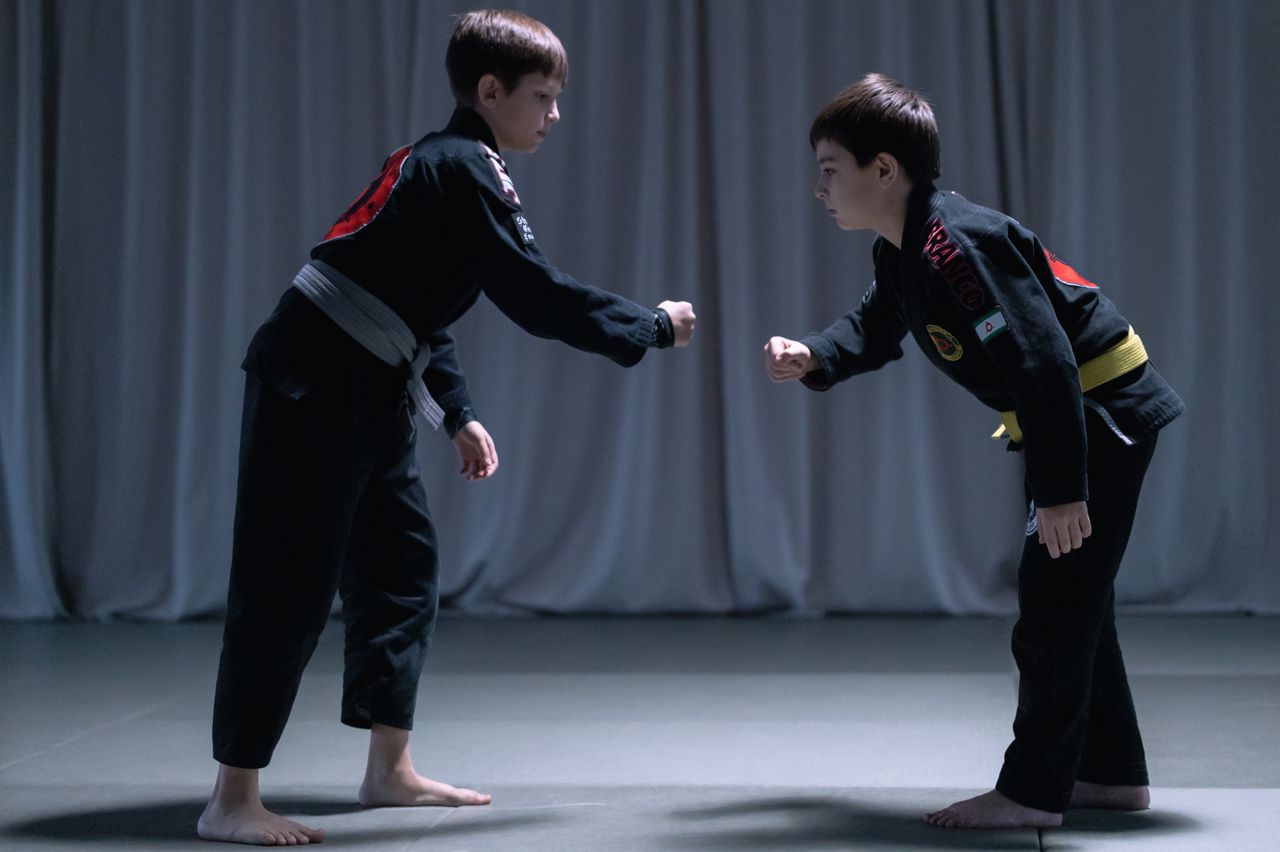
Setup: Students work in pairs, facing each other in fighting stance. One partner is the "leader," one is the "mirror." The leader throws slow, deliberate jabs; the mirror throws their jab at the same time, matching the pace and timing. No contact. Switch roles every 60 seconds.
Duration: 4 to 6 minutes.
Coaching focus: The hand that is not punching. In most beginners, the rear hand drops as the jab extends. Watch for it and correct it with a specific cue: "Keep your right hand guarding your chin, every single jab."
Progression: Increase speed gradually. Add a double jab. Add a jab-cross combination.
2. Combination Relay
What it develops: Combination fluency, transitioning between techniques, composure under mild pressure.
Setup: Line students up in pairs at opposite ends of the mat. Assign a three- to four-technique combination (e.g., jab-cross-kick, or jab-jab-front kick). Each student runs the combination on a pad held by their partner, then walks back and resets. Rotate pad holders every two rounds.
Duration: 6 to 8 minutes.
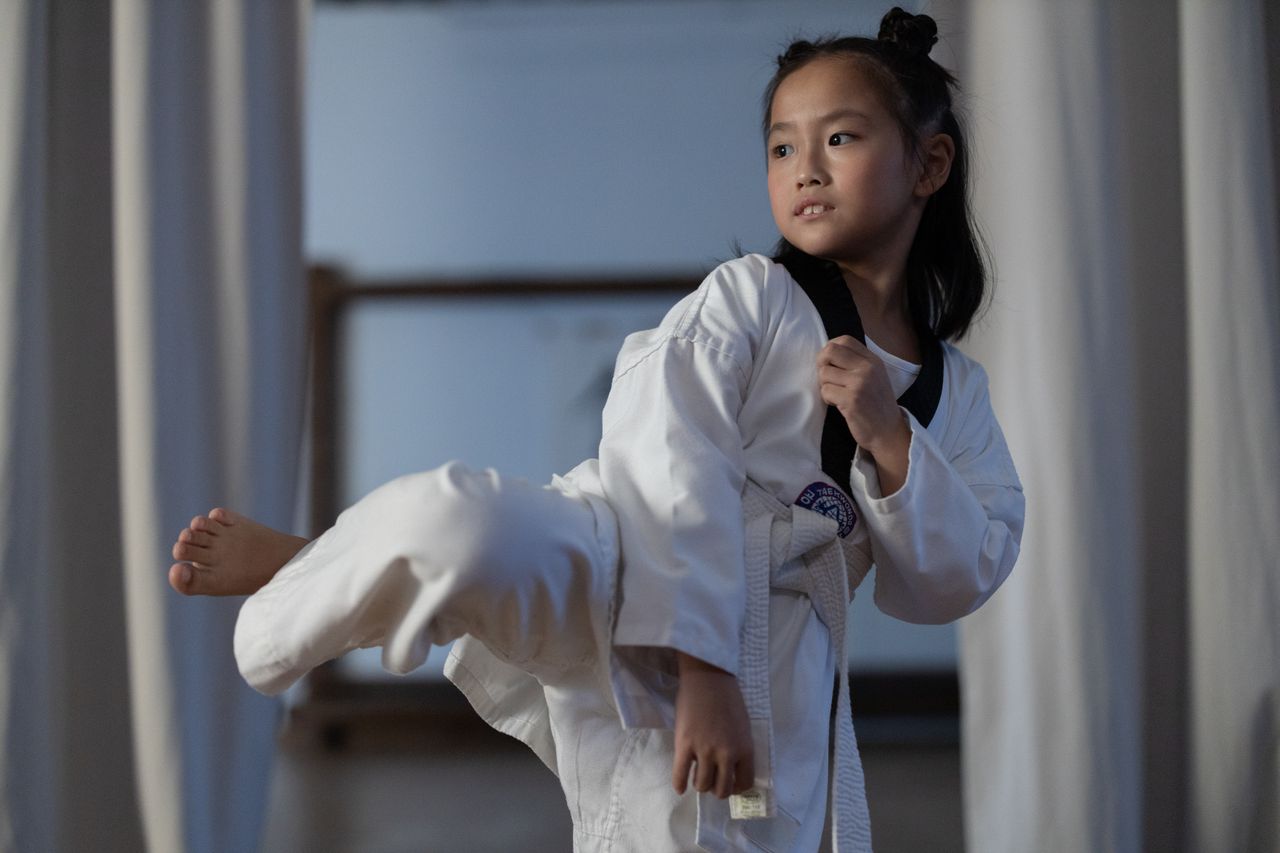
Coaching focus: Chamber and return. Many students extend a kick and let the leg drop rather than returning it to the chamber position before lowering. Call this out as a class correction rather than singling out individuals: "Chamber, extend, chamber, down, not chamber, extend, drop."
Note for mixed belt levels: More advanced students can hold pads for lower belts. This reinforces their own technique through teaching and builds the habit of controlled pad holding.
3. Ten-Second Burst
What it develops: Speed, power output, mental focus, conditioning.
Setup: Students work solo on the air, or in pairs on hand pads. Instructor calls "go" and students throw continuous combinations for exactly 10 seconds, then stop and reset. Rest for 20 seconds. Run six to eight rounds.
Duration: 5 to 6 minutes including rest.
Coaching focus: Technique maintenance under fatigue. Observe which techniques deteriorate first when students are tired, usually the guard and the hip rotation on kicks. Coach corrections between rounds, not during.
Progression: Increase burst length to 15 seconds. Add a specific technique the student must start and finish with.
Blocking and Defence Drills
4. Block and Counter
What it develops: Reaction to incoming strikes, blocking mechanics, transitioning from defence to offence.
Setup: One partner is the attacker, one is the defender. The attacker slowly throws single jabs; the defender blocks and immediately throws a return jab-cross. No contact; attackers aim past the shoulder, not at the face. Both partners must be in fighting stance throughout.
Duration: 3 minutes per role, switch.
Coaching focus: The "and" in block and counter. Students often complete the block and pause before throwing the return. The return should happen on the same breath as the block. It is one movement, not two. Demonstrate the timing clearly before students begin.
5. Slap Down Defence
What it develops: Lower-body kick defence, instinctive reaction, awareness of attack angles.
Setup: Pairs stand in fighting stance. The attacker slowly throws low front kicks; the defender slaps them down with the rear hand. Attackers keep kicks at 30 to 40 percent power. This is a timing drill, not a power drill. Switch roles every 90 seconds.
Duration: 4 to 5 minutes.
Coaching focus: Students tend to look down when defending. Correct with a consistent cue: "Eyes on the chest, not the leg. The chest tells you where the kick is coming from before the leg does."
Note for younger students: Run this drill with kicks aimed at the thigh rather than the lower shin to keep contact minimal and confidence high.
Footwork Drills
6. Shadow Box Circuit
What it develops: Footwork patterns, in-and-out distance management, full-body coordination.
Setup: Mark four positions around the mat with cones or floor tape in a loose square formation. Students start at position one. Instructor calls a direction (forward, back, left, right, diagonal); students step and shadow box for 10 seconds at each position, then move to the next cone on a signal.
Duration: 6 to 8 minutes.
Coaching focus: Stance integrity during movement. When students step backward, their front foot often trails rather than maintaining the fighting stance width. Correct before drilling begins and call it out mid-circuit.
7. Cone Ladder
What it develops: Agility, low stance endurance, balance and posture during direction changes.
Setup: Lay eight cones in a straight line spaced about a metre apart. Students move through the cone ladder laterally in fighting stance - right shuffle to cone two, pivot, left shuffle to cone three, and so on. No crossing of feet. Run each student through the ladder twice, then add a technique at the end (e.g., step off the ladder and throw a jab-cross combination).
Duration: 5 to 7 minutes.
Coaching focus: Foot crossing. Students who are less comfortable in fighting stance will instinctively cross their feet when moving laterally. Call a pause and demonstrate the correct shuffle step before letting students continue.
Reaction and Focus Drills
8. Colour Call
What it develops: Reaction speed, listening attention, technique execution under time pressure.
Setup: Instructor assigns a technique to each of three colours (e.g., yellow = jab, red = front kick, blue = spinning kick). Students stand in fighting stance in a line. Instructor calls a colour at random; students execute the technique as fast as possible. Run 20 to 25 calls in two minutes, varying the pace, some colours called quickly back to back, others with a deliberate pause.
Duration: 4 to 5 minutes.
Coaching focus: The pause before the technique. Some students wait to see what others do before committing. Call it out positively: "I want to see you go first, don't wait. Trust your instinct."
Progression: Add a "freeze" command where students hold their technique at full extension. This reveals balance and control at the endpoint.
9. The Call-Out Game
What it develops: Focus under mild social pressure, target accuracy, controlled power.
Setup: Students pair up with one pad between them. The pad holder positions the pad at random heights (head, body, or low) and calls "go." The striker identifies the target and throws a single technique cleanly. The pad holder scores the hit: one point for a clean strike, no point for a missed target or excessive force. First to ten points switches roles.
Duration: 6 to 8 minutes.
Coaching focus: Target selection. Students will tend to throw their favourite technique regardless of target height. Encourage the question before each strike: "What's the right tool for this target?" A high pad invites a jab; a low pad invites a front kick or roundhouse.
Partner Work Drills
10. Three-Step Sparring Flow
What it develops: Pre-arranged sparring patterns, distance management, composure in contact situations.
Setup: This drill is best for intermediate and advanced students, though it can be simplified for beginners with lower-intensity techniques. Partner A throws a pre-agreed three-technique sequence (e.g., jab-cross-roundhouse); Partner B blocks each technique in sequence and throws a three-technique return. The flow continues for 90 seconds without pause. Partners should not be competitive. The goal is clean execution, not scoring.
Duration: 4 to 5 minutes per side.
Coaching focus: Breathing. Students in pre-arranged sparring often hold their breath, which tightens technique and reduces speed. Encourage exhaling on each strike: "Every technique gets a breath out."
Note for beginners: Run this drill with single technique exchanges first (one jab, one block) before building to a three-technique sequence. Complexity should follow competency, not the class schedule.
Building These Drills Into a Class Structure
These drills work best when they have a clear place in the session. A typical 45- to 60-minute kids' martial arts class might structure them as follows.
The first 8 to 10 minutes cover warm-up: movement games, light cardio, and basic stance work. Drills 3 and 6 work well here. They are energetic, require minimal explanation, and get students moving immediately.
The core technique block (15 to 20 minutes) is where drills 1, 2, 4, and 5 fit. They develop specific technical skills that can connect directly to what students are working toward in their current belt curriculum.
The partner work and games block (10 to 15 minutes) is where drills 8, 9, and 10 shine. Students are warm, technically focused, and ready for the engagement element.
Closing with cool-down stretches (5 minutes) and a brief class debrief keeps the session's learning in mind as students leave.
Tracking which drills your class has covered, and which students are ready to progress to more complex versions, helps connect daily training to belt progression. When attendance and grading milestones are recorded in one place, instructors can make informed decisions about when a student is genuinely ready for their next level rather than relying on a rough count of classes attended.
For more on structuring progression and grading criteria, Classcard's martial arts school management software covers how attendance tracking, skill assessment, and belt promotion records can sit within the same system your class timetable runs on.
The drills above are tools, not a curriculum. The best instructors adapt them to the specific group in front of them - slowing the pace for a nervous new student, extending a drill that the class is clearly benefiting from, or scrapping a drill mid-session because the energy is wrong. That judgment is what separates technically competent delivery from genuinely good teaching.
What makes these ten drills reliable across age groups and belt levels is their shared structure: clear purpose, minimal setup time, movement throughout, and a specific coaching focus that gives instructors something concrete to observe and correct. Boredom in a kids' class is almost always a symptom of too much waiting and too little purpose. These drills are designed to minimise both.
If you teach martial arts and want a system that tracks which students are developing which skills and helps you level up your academy, try Classcard free for 7 days or book a free demo to see how it works for your academy. Attendance, belt progression, class timetabling, and everything else you need in one place, built specifically for structured martial arts schools.
Frequently Asked Questions
What are the best martial arts drills for young beginners (ages 5 to 7)?
For the youngest students, prioritise drills that use colour, sound, and movement rather than pure technique repetition. Colour Call (drill 8), Mirror Jab at a very slow pace (drill 1), and the Cone Ladder (drill 7) work well because they involve clear cues and constant movement. Save partner contact drills for ages 8 and above, or when students have a reliable grasp of control.
How long should a single drill last in a kids' class?
Most kids' drills should run between 4 and 8 minutes per session. Beyond that, even engaged students will show diminishing returns. A useful signal: if more than two or three students have started performing the drill at half-effort, it has run too long. End on a strong round rather than a fading one.
How do I run drills effectively with a mixed belt level class?
Pair higher-belt students with lower-belt students in partner drills. The advanced student reinforces their own technique through teaching, and the beginner benefits from working with someone who models correct execution. For technical drills, give the advanced student a more complex version of the same task (e.g., a four-technique combination instead of two).
Should I use pads with kids in every striking drill?
Not necessarily. Pad work is excellent for developing power and target accuracy, but some of the most useful drills for kids (Mirror Jab, Shadow Box Circuit, Colour Call) require no equipment at all. Alternate between pad work and shadow work within the same class to vary the sensory experience and reduce setup time.
How do I keep students focused during drills when the class is large?
Reduce wait time to as close to zero as possible. If students are queuing, pair them in simultaneous rounds rather than sequential. Give observers a specific task: "While you are waiting, you are shadow boxing the same combination." Active waiting is more productive than passive watching, and it reduces the social pressure that builds in queuing situations.
How do martial arts drills connect to belt grading?
Most belt gradings assess the same techniques these drills develop - strikes, blocks, combinations, and controlled sparring. Running drills that mirror grading criteria means every class session doubles as grading preparation. When your attendance and technique records are tracked digitally, you can flag when a student has completed enough repetitions of a specific skill to progress to the next grading, rather than estimating readiness from memory.