

Starting a music school is one of the most rewarding things a musician or music educator can do. You get to build something that shapes how people connect with music, from the five-year-old taking their first piano lesson to the adult who finally picks up the guitar they always wanted to play.
But it's also a business, and like any business, it succeeds or fails on the decisions you make before the first student walks in the door. This guide covers everything you need to know about starting a music school in 2026: from validating your concept and setting up your space, to hiring teachers, pricing your lessons, and getting your first enrolments.
Step 1: Define Your Music School Model
Before anything else, you need to decide what kind of music school you're building. "Music school" covers an enormous range of formats, and the decisions you make here will shape everything downstream: your location requirements, your pricing, your staffing, and your marketing.
Here are the main models to choose from:
- Instrument-specific studio: You teach one or two instruments, typically privately or in small groups. Lower overhead, easier to start, simpler to manage. Best for solo musicians or duos who want to teach.
- Multi-instrument music school: You offer lessons across a range of instruments (piano, guitar, drums, violin, voice) taught by a team of specialist instructors. More complex to run but higher revenue ceiling.
- Group music classes: You teach ensemble skills, music theory, rhythm, or early childhood music (like Musikgarten or Kindermusik-style classes) in a group format. Lower cost per student, better for filling a space efficiently.
- Online music school: You deliver lessons via video platform (Zoom, FaceTime, specialist tools like Lessonface). Lower overhead, location-independent, but more competitive and harder to build community.
- Hybrid model: In-person for local students, online for those further afield. Increasingly common and often the most resilient model.
Successful music schools start focused - one or two instruments, private lessons - and expand their offering once they've established a student base and cash flow.

Step 2: Research Your Market
Music schools live and die on local demand. Before you sign a lease or buy equipment, spend time understanding the market you're entering.
Some questions to answer:
- How many music schools already operate in your area? What instruments do they teach, at what price points?
- Is there a gap? (Common gaps: schools that don't offer drums or bass guitar; no early childhood music provision; nothing for adult learners)
- What is the demographic profile of your target area? Young families suggest demand for children's lessons. University towns often have strong demand for adult recreational learners.
- Are there primary and secondary schools nearby whose students might want extra tuition?
How to research it:
- Google Maps: search "music school [your city]" and "music lessons [your area]" and map what comes up
- Visit competitor websites. Look at instruments offered, pricing, and whether they seem to have capacity or are fully booked
- Talk to local school music teachers. They often know which instruments students want lessons in and where the gaps are
- Check local Facebook groups and community pages for "looking for music teacher" posts
This research shapes your instrument mix, your positioning, and your pricing. Don't skip it.
Step 3: Write a Simple Business Plan
You don't need a 40-page document. You need clarity on the numbers that determine whether this business is viable.
Thes are the core questions your plan needs to answer:
- Revenue model: How many students at what lesson price generates enough income? A music school charging $60/hour for private lessons, running 20 hours a week, with 80% utilisation, generates $48,000 per year per teaching space. Is that enough to cover costs and pay yourself?
- Startup costs: What do you need to spend before you open? Common startup costs include:
- Acoustic treatment and soundproofing for teaching rooms
- Instruments (especially for lessons where students don't bring their own — pianos, drum kits)
- Furniture (music stands, chairs, storage)
- Software and booking systems
- Website and initial marketing
- Deposits and first/last month rent
- Monthly fixed costs: Rent, utilities, insurance, software subscriptions, any employed staff.
- Break-even point: How many students paying how much per month covers your fixed costs? Know this number before you open.
- Growth targets: What does the school look like at 6 months, 12 months, 2 years? How many students, how many teachers, how many rooms?
A simple spreadsheet covering these numbers is enough to give you a clear picture of whether your model works, and to approach a bank or investor if you need startup funding.

Step 4: Sort Your Legal and Business Basics
Getting the administrative foundation right saves headaches later. This isn't exciting, but it's important.
- Business structure: In the US, most small music schools register as an LLC (Limited Liability Company), which separates your personal assets from business liabilities. In the UK, you'll register as a sole trader or limited company. Consult a local accountant before deciding. The right structure depends on your circumstances.
- Business name and registration: Check that your chosen name isn't already in use. Register it with the relevant government body (Secretary of State in the US; Companies House in the UK).
- Insurance: At minimum, you need:
- Public liability insurance (covering injury to students on your premises)
- Professional indemnity insurance (covering claims related to your teaching)
- Contents insurance (instruments, equipment)If you employ teachers, you'll also need employer's liability insurance.
- Safeguarding (if teaching minors): If your school teaches children under 18, you'll need a safeguarding policy, and all instructors who work with children should hold a valid background check (DBS check in the UK; state-level background check requirements vary in the US).
- Contracts: Have a simple student enrolment agreement drafted covering lesson fees, cancellation policy, notice periods, and liability. This protects both you and the student's family.
Step 5: Find and Set Up Your Space
Your location is one of the most consequential decisions you'll make. It affects your visibility, your student acquisition cost, your daily logistics, and a big chunk of your monthly overheads.
Here are some options to consider:
- Dedicated studio space: You lease a unit and fit it out as a music school. Most control over the environment; highest cost and commitment.
- Shared space rental: You rent teaching rooms by the hour from a church hall, community centre, or shared music facility. Lower risk, less commitment, but limits your ability to build a consistent physical brand.
- Home studio: You teach from a dedicated room in your home. Very low overhead, but mixing home and business creates complexity and limits how many students you can see.
What to look for in a space:
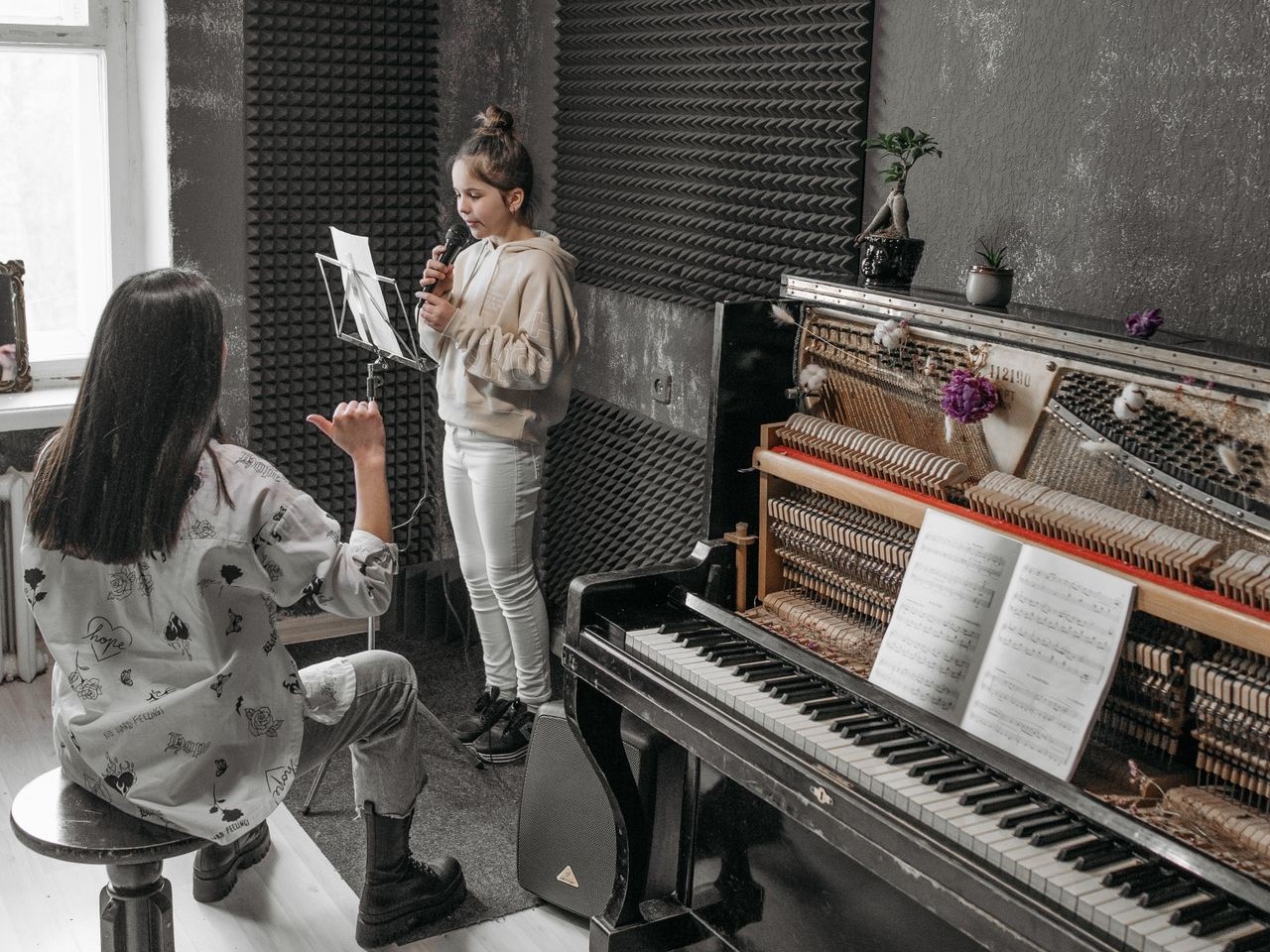
- Soundproofing or acoustic isolation between rooms (critical since students can't learn effectively with noise bleeding from adjacent lessons)
- Parking or easy public transport access for students and parents
- Ground floor or accessible entry (important for younger students and parents with prams)
- Enough room for a waiting area, parents dropping off children need somewhere to sit
- Ceiling height and floor area adequate for drum kits and larger instruments if needed
Acoustic treatment: Even in a purpose-built space, you'll likely need to add acoustic panels, bass traps, and door seals to reduce sound bleed and improve lesson quality. Budget for this.
Step 6: Build Your Curriculum and Lesson Structure
What you actually teach, and how you structure the journey from beginner to advanced, determines whether students progress, stay enrolled, and refer others.
Some key decisions to take:
- Lesson length: Most music schools offer 30-minute lessons for young beginners, 45-minute lessons for intermediate students, and 60-minute lessons for advanced or adult learners. Some schools standardise on one length for simplicity.
- Teaching approach: Are you following a specific method (ABRSM, Trinity, RockSchool for graded exams; Suzuki for strings; Kodály for music theory)? Or taking an unstructured, student-led approach? Both work, but being clear about your philosophy helps attract the right students and set expectations.
- Progression framework: How do students move from one level to the next? Informal assessment? Graded exams? A proprietary level system? Whatever you use, communicate it clearly. Parents want to see their child progressing, and a visible framework helps.
- Group vs. individual: Even if you primarily offer private lessons, consider adding group workshops, ensemble sessions, or music theory classes. They increase revenue per student, improve student outcomes, and build community within the school.
- Recitals and performances: Student recitals are one of the most powerful retention tools a music school has. They give students a goal to work toward, demonstrate progress visibly to parents, and create a sense of belonging. Plan your first recital into your calendar before you open.

Step 7: Set Your Pricing
Pricing a music school is one of the areas new owners consistently get wrong — usually by starting too low and struggling to raise prices later.
How to set your rates:
Research local competitor pricing thoroughly. Know the range in your market. Don't automatically undercut. Parents equate price with quality, and being the cheapest option in your market isn't always the advantage it seems.
Common pricing structures:
- Per-lesson pricing: Students pay for each lesson as they attend. Simple to understand, but creates unpredictable cash flow and makes it easy for students to skip lessons.
- Monthly tuition: Students pay a fixed monthly fee for a set number of lessons per month. Creates predictable revenue, reduces admin, and improves retention. This is the model most established music schools use.
- Term packages: Students enrol and pay for a full term (typically 10–12 lessons) upfront or by standing order. Improves cash flow and commitment.
General benchmarks (US market, 2026):
Prices vary significantly by city and region. Major metropolitan areas (NYC, LA, London) command significantly higher rates than smaller markets.
| Lesson Type | Typical Price Range (US, 2026) |
|---|---|
| 30-min private lesson | $35–$65 |
| 45-min private lesson | $50–$85 |
| 60-min private lesson | $70–$120 |
| Group class (per session) | $20–$45 |
Don't forget: Factor your own time cost honestly. If you're teaching 25 hours per week and charging $50/lesson, your gross teaching revenue is $1,250/week, before rent, insurance, software, marketing, and the admin hours that don't generate direct income.
Step 8: Hire and Manage Your Teachers
If you plan to offer more than one or two instruments, you'll need to hire additional instructors. Finding and keeping good music teachers is one of the most common pain points for music school owners.
Where to find teachers:
- Music conservatoires and university music departments (graduating students looking for teaching work)
- Local musician networks and Facebook groups
- Music teacher directories (in the UK, the Incorporated Society of Musicians maintains a register)
- Word of mouth from within the local music community
What to look for:
- Teaching experience and qualifications (music performance degree or equivalent plus teaching experience)
- DBS/background check compliance if teaching minors
- Reliability - a teacher who cancels frequently damages your reputation with families
- Communication style - how they interact with parents and students reflects directly on your school
Employment vs. contractor: Many music schools use self-employed contractors rather than employed teachers; the instructor teaches their students at your school and pays you a percentage or room hire fee. This reduces your employer obligations but means you have less control over how lessons are delivered. Take local employment law advice before deciding how to structure this.
Tracking teacher performance: Once you have more than two or three instructors, keeping track of who's teaching what, when, and to whom becomes a real operational challenge. This is where a proper management platform matters.

Step 9: Set Up Your Operations and Technology
Running a music school well means keeping track of a lot of moving parts: lesson schedules, student attendance, billing, teacher payments, and parent communications. Getting your operational setup right before you open saves enormous time and reduces errors.
What you need from day one:
- Scheduling system: A calendar-based tool that shows you and your teachers what's on each day, and that allows parents to book, reschedule, or cancel without calling or messaging you directly.
- Online payments: Families should be able to pay their monthly fees, term packages, or individual lessons online. Manual invoicing and cash collection is time-consuming and creates awkward conversations.
- Attendance tracking: You need a reliable record of which students attended, which cancelled, and which are building up missed lessons. This becomes important for billing, make-up lesson policies, and spotting students at risk of dropping out.
- Parent communication: A system for sending lesson reminders, term updates, recital announcements, and fee notifications, without manually messaging each family.
- Student progress records: Especially important if you're running a structured curriculum or graded exam pathway. Teachers need to be able to log what was covered in each lesson and what the student needs to practise.
For a new music school, all of this can be handled through a single platform like Classcard. Rather than stitching together a calendar app, a payment processor, and a WhatsApp group, Classcard gives you scheduling, billing, attendance, parent communication, and student management in one place, at a starting price of $99/month. That's less than the cost of a single missed lesson per week.
Step 10: Get Your First Students
Everything above is preparation. This is where the school actually starts.
Your first enrolments will almost certainly come from:
- Personal network: Tell everyone you know. Friends, family, neighbours, fellow musicians. Your first five to ten students will almost certainly come from people you already know or one degree of separation from you.
- Local school outreach: Introduce yourself to nearby primary and secondary school music teachers. They are asked constantly for lesson recommendations, and a good relationship with even one school music teacher can send a steady stream of referrals.
- Google Business Profile: Set up and fully complete your Google Business listing. When parents search "music lessons near me" or "guitar teacher [your area]," this is what determines whether you show up. Add photos, your instrument list, opening hours, and a link to your booking page.
- Social media: A Facebook page and an Instagram account showing lessons, student milestones, and behind-the-scenes content builds visibility in your local community. Short video clips work exceptionally well; a 30-second clip of a student nailing a piece they've been working on is more compelling than any written testimonial.
- Local listings: Nextdoor, local Facebook community groups, Yell (UK), Yelp (US). Don't underestimate hyperlocal channels.
Trial lessons: Offer a subsidised or free trial lesson. It removes the commitment barrier for new families and gives you a conversion opportunity that a brochure or website never can. Most music schools that offer trials convert a high percentage to ongoing enrolments.
Managing and Growing Your Music School
Once you have students enrolled and teachers teaching, the work shifts from setup to operations and growth. A few principles that separate music schools that scale from those that stagnate:
Retention is more valuable than acquisition
It costs far more to find a new student than to keep an existing one. Focus on the student experience - communication, progression visibility, the recital calendar, teacher consistency - and your churn rate will stay manageable.
Track your numbers monthly
Know your active student count, your monthly revenue, your churn rate (students who left that month), and your new enrolments. These four numbers tell you everything about the health of the school.
Build a waiting list culture
When you're running near capacity, create a waiting list rather than trying to squeeze in extra lessons. A waiting list signals demand, reduces the pressure to discount, and gives you a ready pool of students when a space opens.
Invest in your teachers
High instructor turnover is one of the most damaging things that can happen to a music school. Students often follow their teacher out the door. Pay fairly, be flexible where you can, and treat your instructors as partners in the business.
Use your management platform properly
The biggest operational mistake growing music schools make is continuing to run on spreadsheets, WhatsApp, and manual invoicing after they've scaled past the point where that's sustainable. If you're spending more than a couple of hours per week on admin that software could handle, that's time you should be spending on teaching or growing the school.
Classcard's music school management software is built for exactly this stage, handling your scheduling, billing, attendance, and parent communication automatically so that the admin doesn't become a second full-time job. It offers everything you need to run you music school smoothly, from monthly revenue and retention reports, waitlists, staff and student management modules, and a lot more, including an AI-powered WhatsApp integration.
Starting a music school takes real work, but it's a business model that can be built progressively, starting small and expanding as your student base grows. The keys are getting your model and market right before you open, pricing yourself appropriately from day one, building a teaching team you can trust, and setting up your operations in a way that doesn't bury you in admin.
The music schools that thrive long-term are the ones that treat both sides of the equation seriously: the teaching quality that keeps students progressing and coming back, and the business infrastructure that makes it possible to deliver that quality at scale.
If you're ready to take the next step, explore Classcard's music school features or book a free demo to see how it works in practice.
Frequently Asked Questions
How much does it cost to start a music school?
Startup costs vary enormously depending on your model. A home-based private studio can be started for under $5,000 (acoustic treatment, equipment, website, software). A dedicated multi-room music school with several instructors might require $30,000–$100,000 to set up before opening. The biggest variables are premises costs and the instruments you need to provide.
Do you need qualifications to start a music school?
There are no universal legal qualification requirements to open a music school in most jurisdictions. However, if you teach children, background check requirements apply to all instructors. Having music qualifications (performance degrees, grade 8 or equivalent, teaching certifications) significantly helps with credibility and parent confidence.
How many students does a music school need to be profitable?
It depends on your cost structure, but a rough rule of thumb: you need enough students to cover your fixed monthly costs (rent, insurance, software, any employed staff) before you take any income. For a small single-room studio with modest overheads, that might be 15–20 students. For a larger school, you may need 40–60+ enrolled students to reach break-even.
Is it better to teach online or in-person?
Both have advantages. In-person lessons build stronger relationships, are better for very young learners, and command higher prices. Online lessons offer flexibility and lower overhead. Most schools that start in-person find it worthwhile to add online options, particularly for adult learners with unpredictable schedules.
What software do I need to run a music school?
At minimum, you need scheduling, online payments, attendance tracking, and parent communication. Classcard combines all of these in one platform built specifically for music schools and other activity-based businesses, starting from $99/month.
How do I get my first students for a new music school?
Your personal network is the fastest route to your first enrolments. Beyond that, set up your Google Business Profile, introduce yourself to local school music teachers, and offer a trial lesson. Most new music school owners find that word of mouth and local search drive the majority of early enrolments.