

Running a swim school means juggling a lot: scheduling, payments, parent communications, and keeping every class structured and progressive. One of the simplest ways to save time and raise teaching quality across the board is having a solid library of swim lesson plan templates your instructors can grab and go.
In this guide, you'll find 10 free swim lesson plan templates covering every major level, from parent-and-tot classes through to advanced stroke work, along with tips on how to structure them for consistent, measurable progress. Whether you're setting up your swim school's curriculum from scratch or standardising what your instructors already do, these templates give you a ready-made foundation.
What Makes a Good Swim Lesson Plan Template?
Before diving into the templates, it's worth establishing what separates a useful lesson plan from a generic one. The best swim lesson plan templates share a few things in common:
- A clear objective for the session: Every lesson should have one primary skill outcome, not five. "Students can float unassisted on their back for 10 seconds" is a useful objective. "Students will improve in the water" is not.
- A consistent structure: A warm-up → skill work → consolidation → cool-down structure helps instructors stay on time and helps students know what to expect, which is especially important for younger swimmers.
- Space for instructor notes: Templates that leave room for per-student observations make it far easier to track progress across a term and brief relief instructors.
- Level and age-appropriate activities: A lesson plan for a 4-year-old and a lesson plan for a 12-year-old should look completely different. Templates that try to cover every age at once end up serving none of them well.
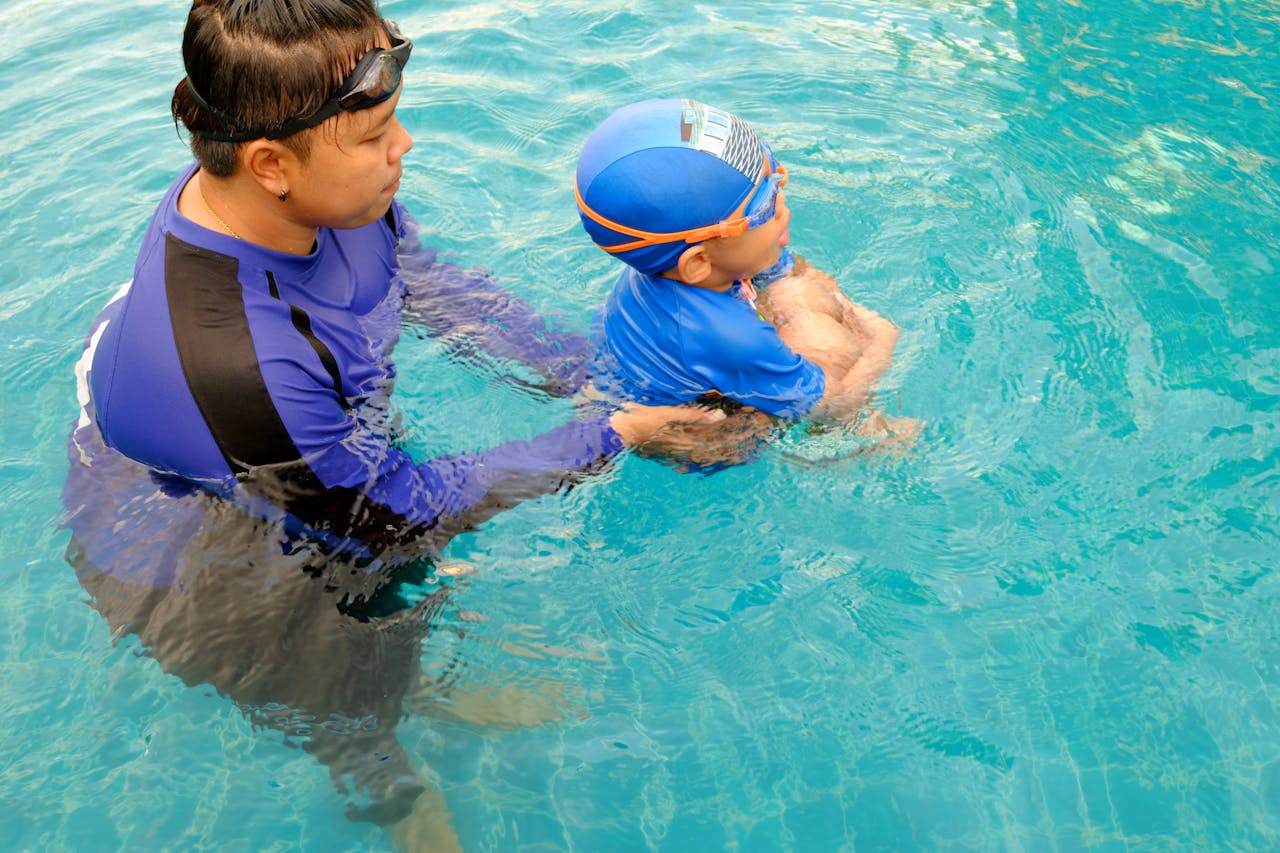
With that in mind, here are 10 templates you can adapt and use across your swim school.
Template 1: Parent & Tot (6–36 Months)
Level: Pre-beginner
Session length: 30 minutes
Class size: Up to 8 parent-child pairs
Objective: Build water comfort and positive early associations. Introduce supported floating and basic breath control cues.
Instructor notes:
- Never force submersion. Follow the child's lead at every stage.
- Coach parents on hold positions (chest-to-chest, underarm support).
- Watch for comfort cues (smiling, splashing, reaching for toys) vs. stress cues (rigid limbs, sustained crying).
Progress markers: Child tolerates face wetting → blows bubbles → accepts brief front float with support → kicks with assistance.
Template 2: Toddler Beginner (2–4 Years)
Level: Beginner
Session length: 30 minutes
Class size: Up to 6 students (with parental support in water)
Objective: Build independent water confidence. Introduce wall-holding, safe exit, and basic propulsion.
Instructor notes:
- Keep sessions game-based throughout. Attention spans are short, transition activities every 3–4 minutes.
- Gradually reduce parental support as confidence grows. By week 4, most toddlers should be attempting wall-crawl independently.
- Use sticker charts to reward milestones. They work well with this age group and give parents something visible to show progress.
Progress markers: Comfortable water entry → blows bubbles independently → completes wall crawl → exits pool with cue.
Template 3: Preschool Beginner (3–5 Years)
Level: Beginner
Session length: 30–45 minutes
Class size: Up to 6 students
Objective: Unassisted floating. Basic kicking and arm movement. Introduction to breath control.
Instructor notes:
- The transition from supported to unassisted float is the key milestone at this level. Spend extra time here before moving on.
- Introduce the concept of "streamline" position simply: "Make yourself like an arrow."
Progress markers: Unassisted front float → wall push-off glide 3 m → kicking with kickboard 5 m → first unassisted swim to instructor.
Template 4: Learn to Swim Level 1 (5–7 Years)
Level: Beginner
Session length: 45 minutes
Class size: Up to 6 students
Objective: Confident water entry and exit. Unassisted floating. Introduction to front crawl kick and arm motion.
Instructor notes:
- At this level, breathing is the hardest skill; don't rush it. Get the kick and arms working together first.
- Common error: lifting the head too far out of the water to breathe. Cue: "One ear stays in the water."
Progress markers: Unassisted float → kickboard kick 10 m → arm drill → combined front crawl 5 m.
Template 5: Learn to Swim Level 2 (6–9 Years)
Level: Intermediate beginner
Session length: 45 minutes
Class size: Up to 8 students
Objective: Front crawl with rotary breathing. Introduction to backstroke. Treading water for 30 seconds.
Instructor notes:
- Rotary breathing is the defining skill at this level. Use the "log roll" drill (side-kick breathing) before progressing to full stroke.
- Backstroke arms: emphasise pinky-finger-first entry to build the right habit early.
Progress markers: Front crawl with breathing 10 m → backstroke 10 m → treading 30 seconds → full-width front crawl unaided.
Template 6: Learn to Swim Level 3 (8–12 Years)
Level: Intermediate
Session length: 45–60 minutes
Class size: Up to 10 students
Objective: Breaststroke and butterfly introduction. Extended endurance. Tumble turn basics.
Instructor notes:
- Breaststroke timing is notoriously difficult - cue "pull, breathe, kick, glide" as a verbal rhythm.
- Butterfly at this level is introduced as a fun challenge. Technique matters less than getting the body undulation established.
Progress markers: Breaststroke 25 m → butterfly kick 10 m → medley 100 m.
Template 7: Teen Beginner (13–17 Years, Non-Swimmers)
Level: Beginner (older learner)
Session length: 45 minutes
Class size: Up to 6 students
Objective: Overcome water anxiety. Establish floating, breath control, and basic propulsion. Swim 15 m unassisted.
Instructor notes:
- Tone matters enormously with teen learners. Use adult language, explain the "why" behind every drill, and set measurable mini-goals at the start of each session ("Today's goal: swim 10 m without stopping").
- Avoid any language that could feel infantilising. Positive reinforcement works, but framed as achievement, not effort.
Progress markers: Face submersion → unassisted back float → glide 5 m → unaided swim 15 m.
Template 8: Adult Beginner (18+, Non-Swimmers or Returning)
Level: Beginner
Session length: 45–60 minutes
Class size: Up to 6 students
Objective: Build trust in buoyancy. Develop breath control and basic stroke mechanics. Swim 25 m continuously.
Instructor notes:
- Create a non-judgmental environment from the first session. Many adult learners carry anxiety or past negative experiences.
- Celebrate every milestone explicitly. Adults respond well to understanding their own progress curve.
- Offer individual goal-setting; some are training for a triathlon, others simply want to feel safe on a boat.
Progress markers: Unassisted float → glide 5 m → kickboard kick 10 m → front crawl 25 m.
Template 9: Squad Training / Competitive Prep (12+ Years)
Level: Advanced
Session length: 60–90 minutes
Class size: Up to 12 students
Objective: Build aerobic base, improve stroke efficiency, and develop race-pace awareness.
Instructor notes:
- Track send-off times and split times to build pace awareness. Introduce basic race strategy from this level upward.
- Rotate emphasis each week: one session stroke-focused, one endurance-focused, one speed-focused.
Progress markers: 400 m continuous → 8 × 50 m on send-off → sub-40s 50 m front crawl → complete medley 200 m.
Template 10: Mixed-Ability Group Lesson (Community or Enrichment Programs)
Level: Mixed (beginner–intermediate)
Session length: 45 minutes
Class size: Up to 12 students (grouped by ability within class)
Objective: Deliver differentiated instruction across two or three ability groups simultaneously. Progress all swimmers within their own level.
Instructor notes:
- Station-based structure is essential for mixed groups. Set clear visual markers (coloured cones on pool deck) for each group's zone.
- Brief advanced swimmers to be "peer supporters" during the game, it reinforces their skills and builds class culture.
- Differentiated tracking is critical: use a separate progress card for each student, not a group-level observation.
Progress markers: Track individually by group. Review at end of term block for level advancement.
How to Use These Templates in Your Swim School
Having templates is one thing, butimplementing them consistently across a full team of instructors is another. Here's how to get the most out of them.
- Standardise across your instructor team. If every instructor uses their own informal structure, you lose consistency and make it nearly impossible to track student progress objectively. Pick a base template format and make it the school standard.
- Build a term block from the templates. A single lesson plan isn't enough. Swimmers need a progression across a series of sessions. Use one template as the structure and map out a 4–8 week block from it, showing how the focus skill evolves week to week.
- Leave room for differentiation. Every class has students moving at different speeds. A good lesson plan template includes a notes section where instructors can jot down which students need more time on a skill and which are ready to move ahead, so that no one gets left behind or held back.
- Review and iterate each term. At the end of every term block, review which activities got results and which didn't. Templates should be living documents, not archived PDFs.
How Classcard Helps You Run Your Swim School's Curriculum
Templates solve the teaching side, but running a swim school involves a lot more than lesson planning. Scheduling classes, tracking each swimmer's progress across levels, managing enrolments, and keeping parents informed all take up time that should be going toward coaching.
This is where Classcard comes in. Classcard is an all-in-one class management platform built for activity-based businesses like swim schools. It handles your scheduling, attendance, payments, and student progress tracking in one place, so your instructors can focus on what they came to do. With Classcard, you can track each swimmer's progress through levels, send automated parent updates, and manage your full class schedule without relying on spreadsheets or WhatsApp group chats. The platform also includes an AI-native WhatsApp integration for parent queries and automated class descriptions, which cuts down on the admin overhead that comes with running multiple levels simultaneously.
Whether you're managing a single pool with a handful of instructors or running a multi-site swim school, Classcard gives you the operational infrastructure to grow without the chaos. You can explore how it works here or book a free demo to see it in action.
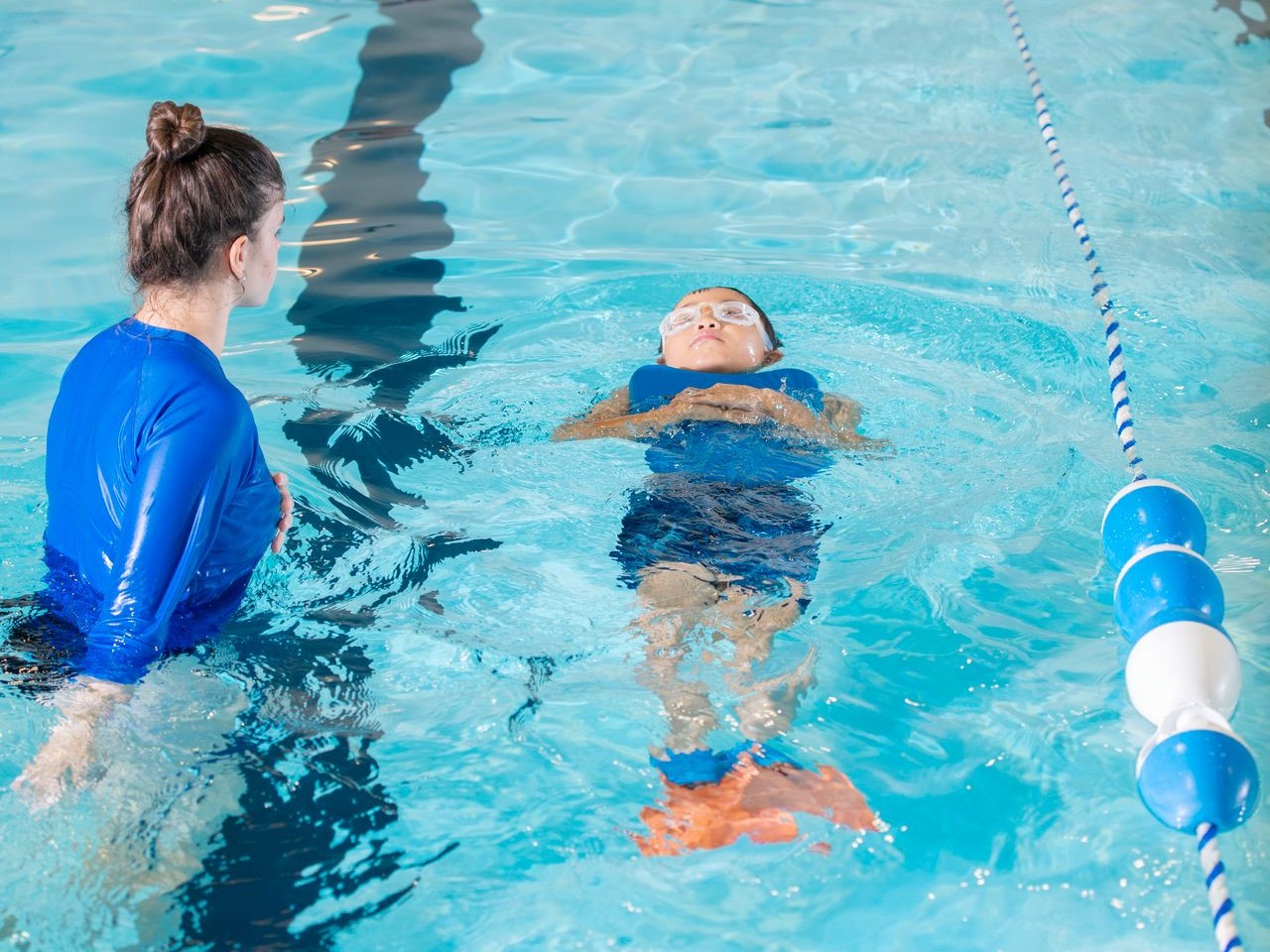
Structured lesson plans are the difference between a swim school that delivers consistent results and one where quality depends entirely on which instructor shows up that day. The 10 templates above cover every major level, from parent-and-tot through to competitive squad work, and give you a ready-made foundation for building a curriculum your whole team can follow.
Use them as starting points, adapt them to your pool and your students, and build your term blocks around them. Pair that with the right management software to handle the operational side, and you have everything you need to run a swim school that grows sustainably and delivers measurable progress for every swimmer.
Frequently Asked Questions
What should a swim lesson plan include?
A good swim lesson plan includes a session objective, a structured format (warm-up, skill focus, consolidation, cool-down), the activities for each section with estimated timings, and space for instructor notes on individual student progress. It should be specific to the level and age group being taught.
How long should a swim lesson plan be?
Most swim lessons run between 30 and 60 minutes depending on the age group - 30 minutes for toddlers and young children, 45–60 minutes for older children and adults. The lesson plan should map activities to the full session length without dead time or rushing.
How do I structure a beginner swim lesson?
A beginner swim lesson should follow a progressive arc: start with water comfort and entry, move into the core skill of the session (floating, kicking, or basic arm movement), allow time for unassisted practice or a game that reinforces the skill, then finish with a calm cool-down. Never skip the comfort phase, especially for young or anxious swimmers.
How many students should be in a swim lesson?
Ratios vary by age and level. A common guideline is 1 instructor to 4–6 toddlers (with parents in water), 1:6 for young children, and up to 1:10–12 for older children and adults. For mixed-ability classes, smaller groups or a two-instructor setup is strongly recommended.
What is the difference between a swim lesson plan and a block plan?
A lesson plan covers a single session. A block plan (or term plan) maps out the progression across a series of lessons, typically 4, 6, or 8 weeks, showing how the focus skill builds from session to session. Good swim schools use both: a block plan to map the term, and individual lesson plans to structure each class.
How does Classcard help with swim school management?
Classcard is a student and class management platform designed for swim schools and other activity-based businesses. It handles scheduling, attendance, payments, student progress tracking, and parent communication in one place, saving significant time and effort. You can learn more here.