

The first ten minutes of a youth training session are the most important ones you will run all evening. Players arrive distracted, cold, and still mid-conversation from the car. If you start with static stretches and a slow jog, you lose them before the session begins. If you start with something competitive and fun, you have them for the next hour.
A good warm-up game does three things simultaneously:
- it raises heart rate and body temperature to prepare muscles for load,
- it puts players on the ball early to build touch and confidence, and
- it creates the focus and energy that carries through the rest of training.
The best ones also smuggle in technical skills like dribbling, awareness, quick decision-making, without players realising they are being coached.
The 15 games below are organised by age group and purpose. Most require nothing more than cones and balls. Each one includes setup, how to play, coaching points, and progressions so you can adapt them as your group develops.
Why Warm-Up Games Beat Static Stretching for Youth Players
The research on static stretching before physical activity is clear: it reduces power output and does little to prevent injury in young players. Dynamic movement is what actually prepares the body, and for youth players, dynamic movement is most effective when it is disguised as a game.
There is also a confidence dimension. Young players who get early touches on the ball in a low-pressure, fun context start the session feeling good about themselves. A player who has already beaten someone in Sharks and Minnows, or kept possession through a rondo, walks into the main session with a different mindset to one who has spent the first ten minutes standing in a stretching circle.
Finally, warm-up games tell you things. Watching your players in an unstructured, playful activity is one of the best ways to assess who is sharp tonight, who is distracted, who needs encouragement, and who is ready to be challenged.
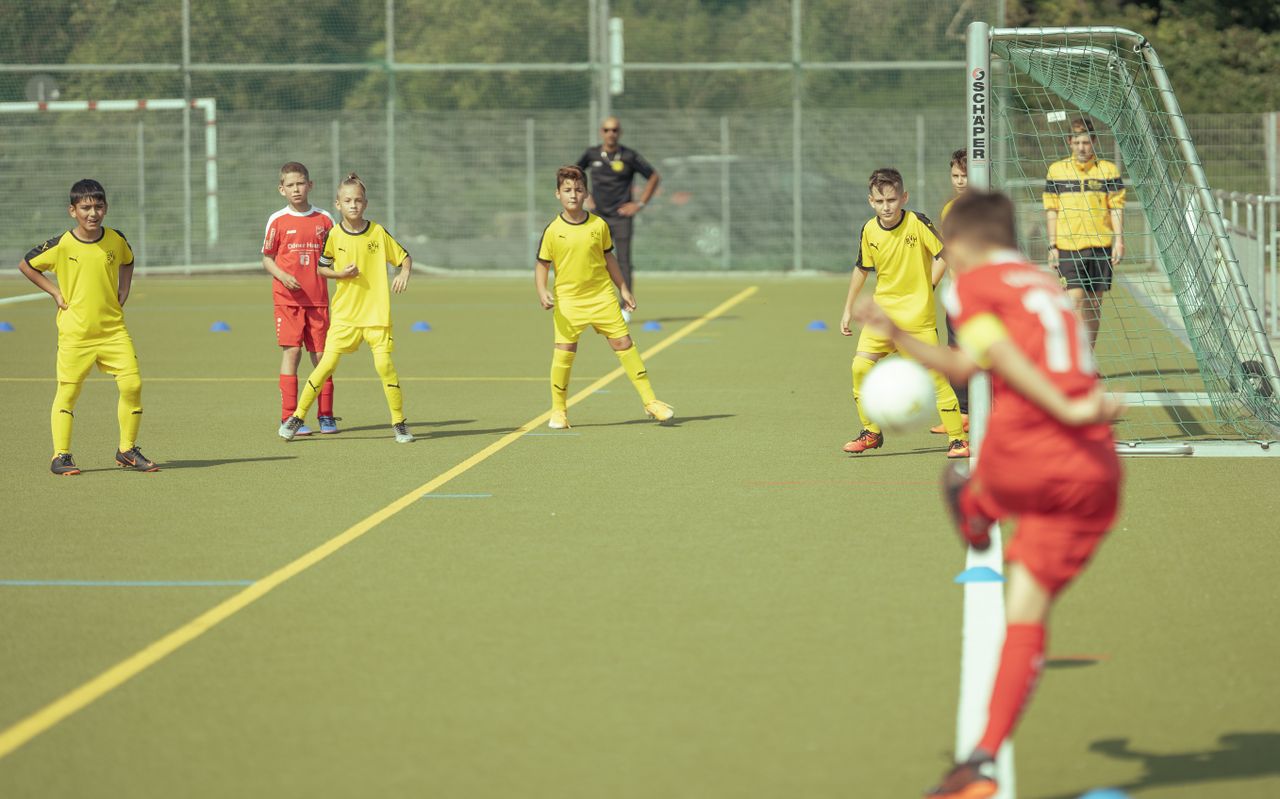
Warm-Up Games by Category
The games below are grouped into four categories:
- dribbling and ball control games (best for younger age groups and early technical development),
- possession and passing games (for players who have basic control),
- awareness and reaction games (sharpen focus and decision-making), and
- small-sided competitive games (build match intensity from the start).
Within each category, games are roughly ordered from simplest to most complex.
Dribbling and Ball Control Games
These are the bread and butter of youth warm-ups, especially for U6 to U10 players. Every player has a ball, which means maximum touches, maximum engagement, and no one standing around waiting for a turn.
1. Sharks and Minnows
Age group: U6 to U12
Players: 8 to 20
Time: 8 to 10 minutes
Setup: Mark out a rectangular grid proportionate to the group size. For U8, roughly 20x15 metres works well. All players except one or two have a ball. The players with balls are "minnows." The one or two without balls are "sharks."
How to play: Minnows dribble inside the grid. Sharks try to kick a minnow's ball out of the grid. Any minnow whose ball is knocked out joins the sharks. Last minnow with a ball wins. Reset and go again.
Coaching points: Encourage minnows to keep their head up to see the sharks coming, use their body to shield the ball, and change direction quickly when under pressure. Sharks should work on their angle of approach to cut off escape routes.
Progressions: Reduce the grid size as numbers thin out. Allow sharks to dribble a ball too, so they must win possession rather than simply kick the ball away. Add a second ball per player for an extra challenge.
2. Gates Dribbling
Age group: U6 to U12
Players: Any number
Time: 8 minutes
Setup: Scatter pairs of cones (gates) around the grid - roughly one gate per player, spaced 1 to 1.5 metres apart, facing in random directions. Every player has a ball.
How to play: Players dribble freely around the grid and score a point by dribbling through a gate (from either direction). The coach calls out how many gates to score through in a set time, for instance, "score through five gates before I blow the whistle." Players count their own score.
Coaching points: Look up to find the next gate rather than watching the ball. Use the inside and outside of both feet. Accelerate after clearing a gate to find the next one.
Progressions: Gates count only when dribbled through in a specific direction (coaches call "left gates" or "right gates," meaning only gates scored from the left side count). Remove gates progressively as the game continues, shrinking the available scoring options. Pair players so they share a ball and must pass through the gate together.
3. Freeze Tag
Age group: U6 to U10
Players: 8 to 16
Time: 6 to 8 minutes
Setup: A defined grid. Every player has a ball. One or two players are "it."
How to play: Players dribble around the grid. The players who are "it" try to tag other players (or kick their ball out). A tagged player must freeze in place, ball between their feet and legs apart. A frozen player is unfrozen when another dribbling player passes their ball through their legs. The game continues until all players are frozen, or for a set time, after which the player who tagged the most wins.
Coaching points: Dribbling players should change pace, change direction, and use the width and length of the grid to stay away from taggers. The urgency of avoiding being tagged naturally produces the kind of close ball control and direction changes you want to coach.
4. Bulldogs
Age group: U8 to U14
Players: 10 to 25
Time: 8 to 10 minutes
Setup: Two end zones marked at opposite ends of a large grid (roughly 40x25 metres for U12). One or two players start in the middle without a ball. All other players have a ball and start in one end zone.
How to play: Players must dribble from one end zone to the other without the central player(s) kicking their ball out of the grid. Anyone who loses their ball joins the middle as a defender. The last player still dribbling wins.
Coaching points: Timing the run to go when defenders are occupied is a key skill here. Players in the middle should work together to cover ground and cut off angles, not all converge on the same ball.
Progressions: Defenders who win the ball must dribble it to a target zone before the player they tackled can re-enter. For older groups, require players to use a specific foot throughout.
5. 1v1 Dribbling Circuit
Age group: U10 to U14
Players: Any even number
Time: 8 to 10 minutes
Setup: Pairs of players face each other across a line of cones, 8 to 10 metres apart. Each player has a ball. The coach sets the exercise - "dribble to your partner's line, come back."
How to play: Pairs compete: first player to dribble to the opposite line and back three times wins. Immediately switch to a new challenge before the energy drops. Run it as a circuit of quick competitive rounds.
Coaching points: Drive the ball with pace in straight lines. Brake cleanly. Stay on your toes. The competitive element naturally produces the intensity you want.
Possession and Passing Games
For U10 and above, once players have basic ball control, possession-based warm-ups build technical and tactical habits that transfer directly into match play. The rondo is the gold standard here. It is used by elite clubs worldwide because it crams the key decisions of the game into a small, fast, repeatable format.
6. Rondo (4v1 or 4v2)
Age group: U10 to U14
Players: Groups of 5 or 6
Time: 8 to 10 minutes
Setup: Small circle or square grid, roughly 8x8 metres for a 4v1, or 10x10 for a 4v2. Four (or more) players on the outside with the ball, one or two in the middle defending.
How to play: Outside players pass to keep the ball away from the defenders. When the defender wins the ball, the player who lost it swaps in. In a 4v2, the player who made the error causing the loss swaps in.
Coaching points: Outside players must move to give angles. The player on the ball has options before they receive (pre-scanning). Quick passing off one or two touches. Defenders press together and angle their approach to limit escape routes.
Progressions: Limit to one touch. Require players to make at least three passes before the defender can be swapped out. Use a directional rule - passes must go to a player who is not directly adjacent.
7. Circle Warm-Up
Age group: U8 to U14
Players: 8 to 16
Time: 6 to 8 minutes
Setup: Players in a circle, one ball between the group. One player in the middle.
How to play: Players on the outside pass across or around the circle while the middle player tries to intercept. The player whose pass is intercepted takes the middle. Add a second ball for more advanced groups.
Coaching points: Players receiving the ball should open their body to face the circle, giving them a view of every passing option before the ball arrives. The weight and timing of each pass matters: too hard and the receiver is rushed, too soft and the defender intercepts. Encourage players to call for the ball or signal direction so teammates always know where the next pass is going.
8. Four Goal Passing Game
Age group: U10 to U14
Players: Two teams of 4 to 6
Time: 8 minutes
Setup: A square grid with a small goal (two cones, 1 metre wide) in the middle of each side. Four goals total, facing outward. Two teams, no goalkeepers.
How to play: Each team scores by passing the ball through any of the four goals (from inside to outside). Teams defend all four goals simultaneously. The game rewards quick ball movement and awareness of which goal is open.
Coaching points: Players need to keep their heads up to spot open goals. When defenders crowd one goal, the team in possession should switch the point of attack quickly to find a free side. Encourage communication between teammates to identify open spaces and goals.
Awareness and Reaction Games
These games prioritise alertness, scanning, and quick decision-making, qualities that carry directly into match performance but are hard to coach explicitly.
9. Colour Dribbling
Age group: U8 to U12
Players: Any number
Time: 6 to 8 minutes
Setup: Scatter cones of four or five different colours around the grid. Every player has a ball.
How to play: Players dribble freely. When the coach calls a colour, the players must dribble to the nearest cone of that colour and touch it with their foot before the whistle. Multiple colours can be called in rapid sequence. Players score a point for reaching the right cone first.
Coaching points: Head up to scan for colours. Accelerate to the cone, decelerate cleanly, and get back into dribbling without stopping. The rapid colour changes develop quick decision-making under no defensive pressure, a foundation for decision-making under pressure later.
10. Shadow Dribbling
Age group: U8 to U12
Players: Pairs
Time: 6 to 8 minutes
Setup: Pairs of players, both with a ball, in a defined space. One player leads, one follows.
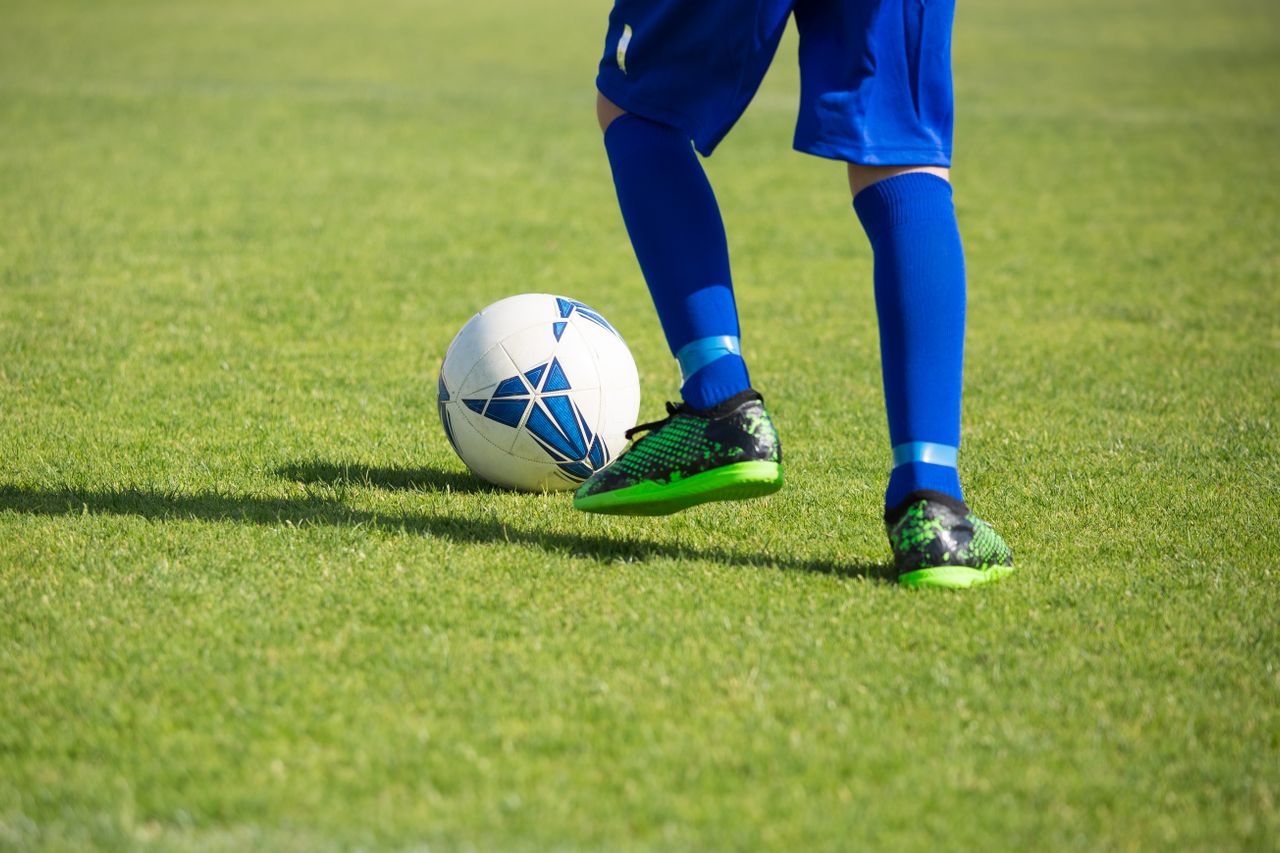
How to play: The lead player dribbles freely and changes direction, speed, and foot at will. The shadow player mirrors every movement as closely as possible. Swap roles after 60 seconds.
Coaching points: Leaders should use both feet, change direction sharply, and vary pace to challenge the shadow. Shadows should watch the lead player's hips and body orientation, not their feet, to anticipate direction changes earlier.
11. Numbers Game
Age group: U10 to U14
Players: Two teams of 4 to 8
Time: 8 to 10 minutes
Setup: Each player on each team is assigned a number. One ball in the centre of the grid.
How to play: Coach calls two numbers (one from each team). Those two players sprint to the ball and play 1v1 until the coach calls "next", at which point both return to their starting position and two new numbers are called. Progress to calling three numbers per team for a 2v2, then four for a 3v3.
Coaching points: Emphasise sharp reaction speed off the starting position. For the player who arrives second, the key decision is whether to press immediately or delay and force the opponent into a mistake. For the player who arrives first, the challenge is finishing before the defender closes the distance, which means taking fewer touches and committing to a decision early.
Small-Sided Competitive Games
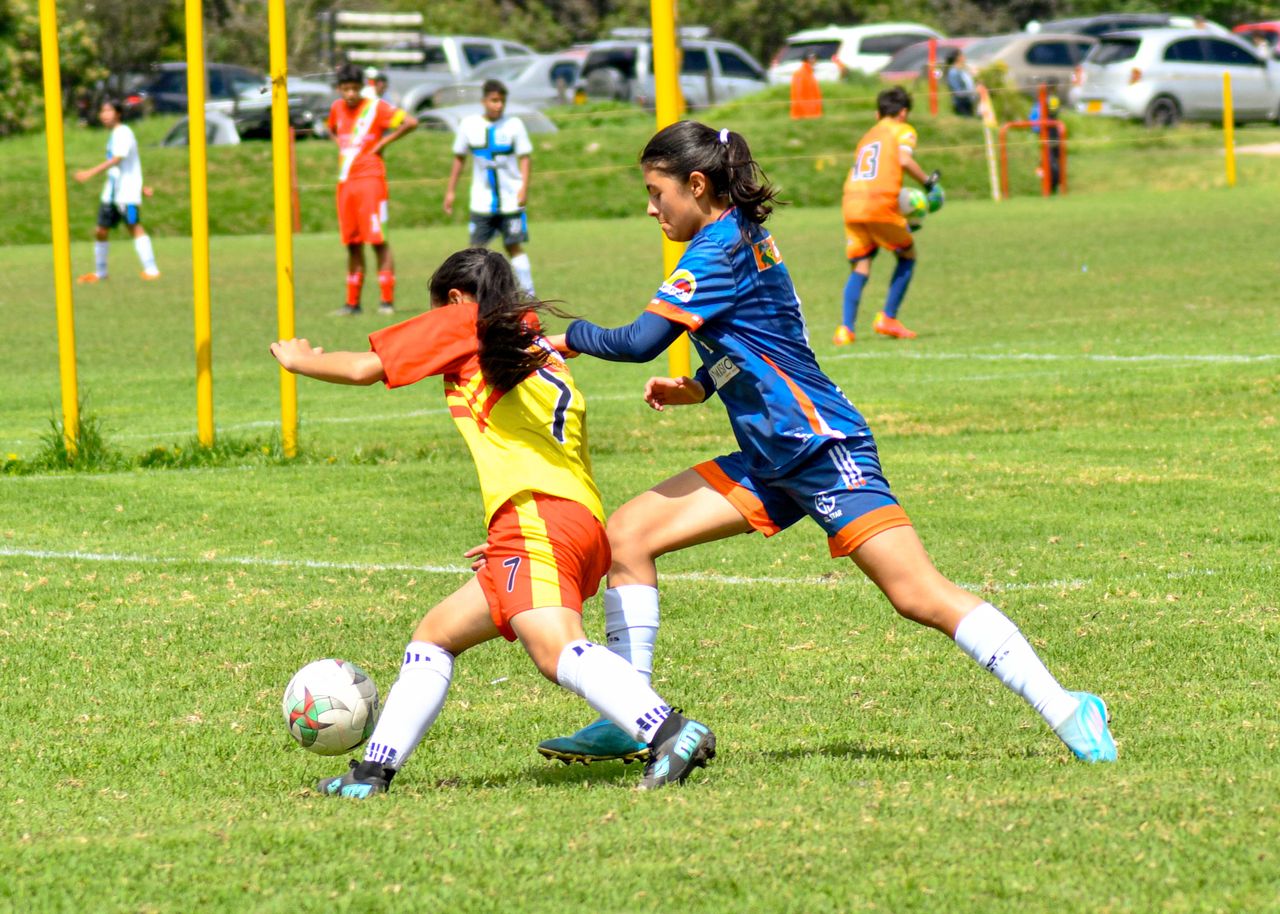
These bring the warm-up to its natural end: a small, competitive game that bridges the gap between the warm-up and the main session. They should feel like a game, not a drill.
12. Arrival Rondo Race
Age group: U10 to U14
Players: Groups of 5
Time: 8 minutes
Setup: Two 4v1 rondos run simultaneously. Each group counts their completed passes before a turnover.
How to play: Both groups compete to see which can complete the most passes in a set time without giving the ball away. The losing group does a light forfeit (five press-ups or a sprint across the grid) and the game resets.
Coaching points: The competitive element pushes the tempo to match intensity. Defenders must work harder when they know their opposite number is also under pressure.
13. Three-Team Possession
Age group: U12 to U14
Players: Three teams of 3 or 4
Time: 10 minutes
Setup: A medium grid (25x20 metres). Three teams in different colours.
How to play: Two teams combine to keep possession from the third. When the defending team wins the ball, the team who made the error becomes the new defender. The defending team counts how many times they touch the ball, with a higher count being worse. The team with the fewest touches as defenders at the end wins.
Coaching points: Players in possession should offer support angles that give the ball carrier at least two options at all times, spreading wide and providing depth behind the ball. Communication is essential: players who can see the picture should call out where the next pass should go. The rotation mechanic gives the defending team a built-in incentive to win the ball back quickly, because the longer they defend, the more their opponent's passing rhythm improves.
14. 4v4 to Two Goals
Age group: U10 to U14
Players: Two teams of 4
Time: 10 minutes
Setup: A small pitch with goals at each end. No goalkeepers. Plenty of balls stashed around the perimeter so restart is immediate.
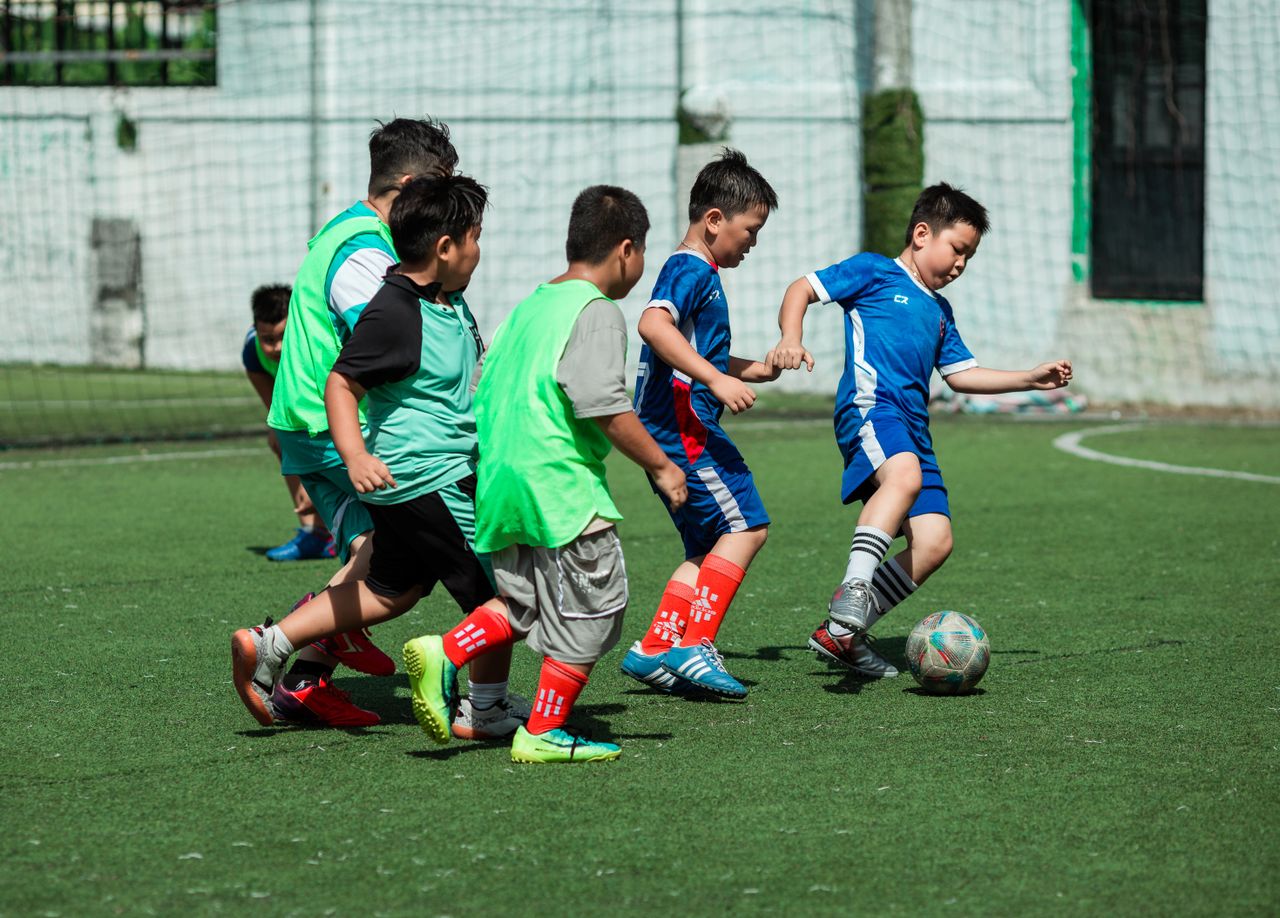
How to play: Standard small-sided game. The small squad numbers mean every player is on the ball regularly, and there is nowhere to hide, which lifts intensity naturally. The game restarts within seconds of the ball going out to keep the intensity high throughout; the moment you stop to retrieve a ball, you lose the tempo you have been building.
Coaching points: Resist the urge to coach heavily during this game. Watch, observe, and pick two or three things to address in the main session. This is a warm-up game first and a coaching activity second.
15. High-Tempo Arrival Training
Age group: U12 to U14
Players: Full squad, split into groups
Time: 10 to 12 minutes
Setup: Three or four stations around the pitch: a rondo, a 1v1 gate game, a passing combination, and a small sided game. Players rotate on the whistle every two to three minutes.
How to play: As players arrive to training (which is almost never all at once), they join the nearest station and get immediately on the ball. The rotation ensures every player gets a variety of warm-up stimuli before the main session starts.
Coaching points: This format solves the perennial youth coaching problem of late arrivals. Players who arrive early are already working rather than standing around waiting. The coach can be moving between stations to observe and offer brief coaching points before the session proper begins.
Quick Age-Group Reference
If you are short on time and need to pick quickly, use this as a starting point:
- U6 to U8: Sharks and Minnows, Freeze Tag, Colour Dribbling. Every player has a ball at all times. Rules are simple and the imaginative premise holds attention completely.
- U8 to U10: Gates Dribbling, Bulldogs, Circle Warm-Up, Shadow Dribbling. Start introducing light competition and simple decision-making under pressure.
- U10 to U12: 4v1 Rondo, Four Goal Passing Game, Numbers Game. Focus shifts toward possession, awareness, and the relationship between technical ability and decision-making.
- U12 to U14: 3v3 Possession, Arrival Training, High-Tempo Rondo Race. Match intensity from the first whistle. Less explanation, more playing.
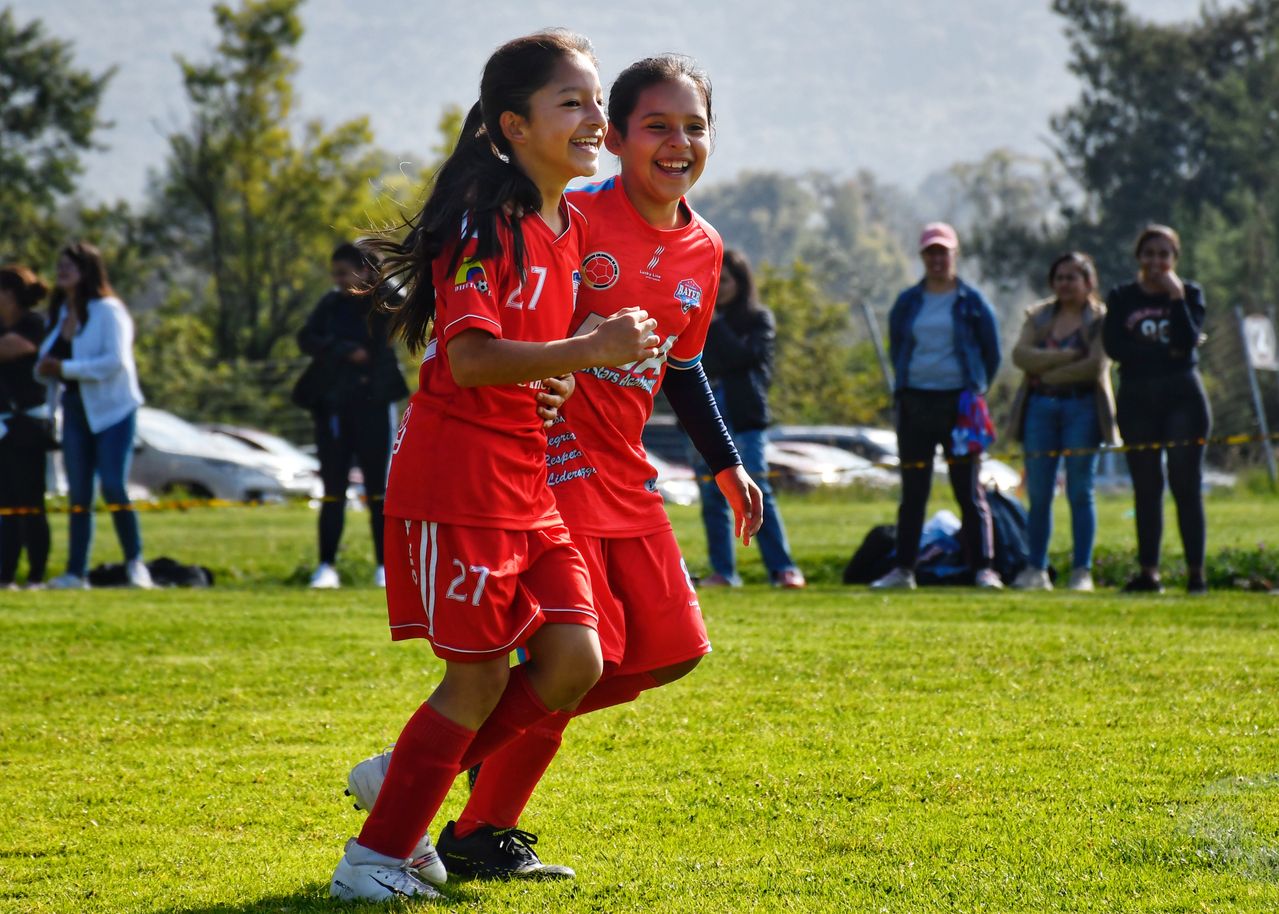
A well-chosen warm-up game costs you ten minutes and pays back for the next hour. Players who are warm, on the ball, and mentally engaged are players who learn faster, compete harder, and leave training feeling good about what they did. That feeling is what brings them back next week.
The games above give you a rotation to work from. Pick two or three for each session, vary them week to week, and pay attention to which ones your group responds to best. Over a season, you will build a reliable repertoire that fits your players, your age group, and your training environment.
If you are running a youth football academy and want to spend less time on admin so you can spend more time on the pitch, Classcard is built for exactly that. Our football academy management software handles scheduling, attendance, parent communication, billing, and lead management in one platform so your coaches can focus on training future champions.
Interested in exploring how it could benefit your football academy? Try it free for 7 days or book a free demo to see how it works.
Frequently Asked Questions
How long should a warm-up be for youth soccer training?
Eight to twelve minutes is the right range for most youth training sessions. Under-8 groups can get away with six to eight minutes on a warm activity. Older age groups who are about to do high-intensity technical or tactical work benefit from a full twelve minutes, including a progression from lower to higher intensity.
Do youth players need to stretch before training?
Dynamic movement is far more effective than static stretching for preparing youth players' bodies for training. The warm-up games above all involve dynamic movement - changes of direction, acceleration, deceleration - which raises heart rate and body temperature far more effectively than a stretching circle. Save static stretching for the cool-down, if you use it at all.
How do I keep disruptive players engaged during the warm-up?
Disruptive behaviour during warm-ups is almost always a sign that the activity is not engaging enough. The games above are all inherently competitive and immediately engaging. If a player is still disruptive, give them a leadership role - let them be the shark, the defender in the rondo, or the caller in the Colour Dribbling game. Responsibility tends to channel energy productively.
Can I use the same warm-up game every session?
You can, but you should not. Familiarity with a game's rules can let you get into it faster with younger groups, but repetition also breeds disengagement. Rotate through six to eight games on a cycle, and introduce one new game per month to keep things fresh.
What do I do if players arrive at different times?
Arrival training (game 15) is built specifically for this. Set up two or three stations and have players join the nearest one the moment they arrive. It solves the late-arrival problem by removing the dependency on having the full group assembled before you can start.
Are rondos suitable for U8 players?
Rondos are technically a U10-and-above activity in their standard form, because they require enough ball control to pass under pressure. For U8, a simplified version with a larger grid, no touch restrictions, and a passive defender (who shadows rather than fully pressures) can work, but Sharks and Minnows and Freeze Tag will produce better engagement and more ball touches for that age group.