

Quick answer: To market a martial arts school on a budget, complete your Google Business Profile, ask current families for referrals, and run a structured trial class. Add free community workshops, belt test events, and short training videos, then put $200 to $300 per month into local social ads. Keep students enrolled with visible belt progress and fast follow-up.
Martial arts schools have a marketing advantage most local businesses would envy: visible results. A nervous white belt who earns a yellow belt a few months later is proof of your coaching. The challenge is getting that proof in front of families who haven't walked through your door yet.
Most schools grow through word of mouth, which is strong but slow. This guide covers the most effective martial arts school marketing tactics for a limited budget, ordered from the highest return for the lowest cost to the few worth paying for. If you're still setting up, start with our guide to how to start a martial arts school.
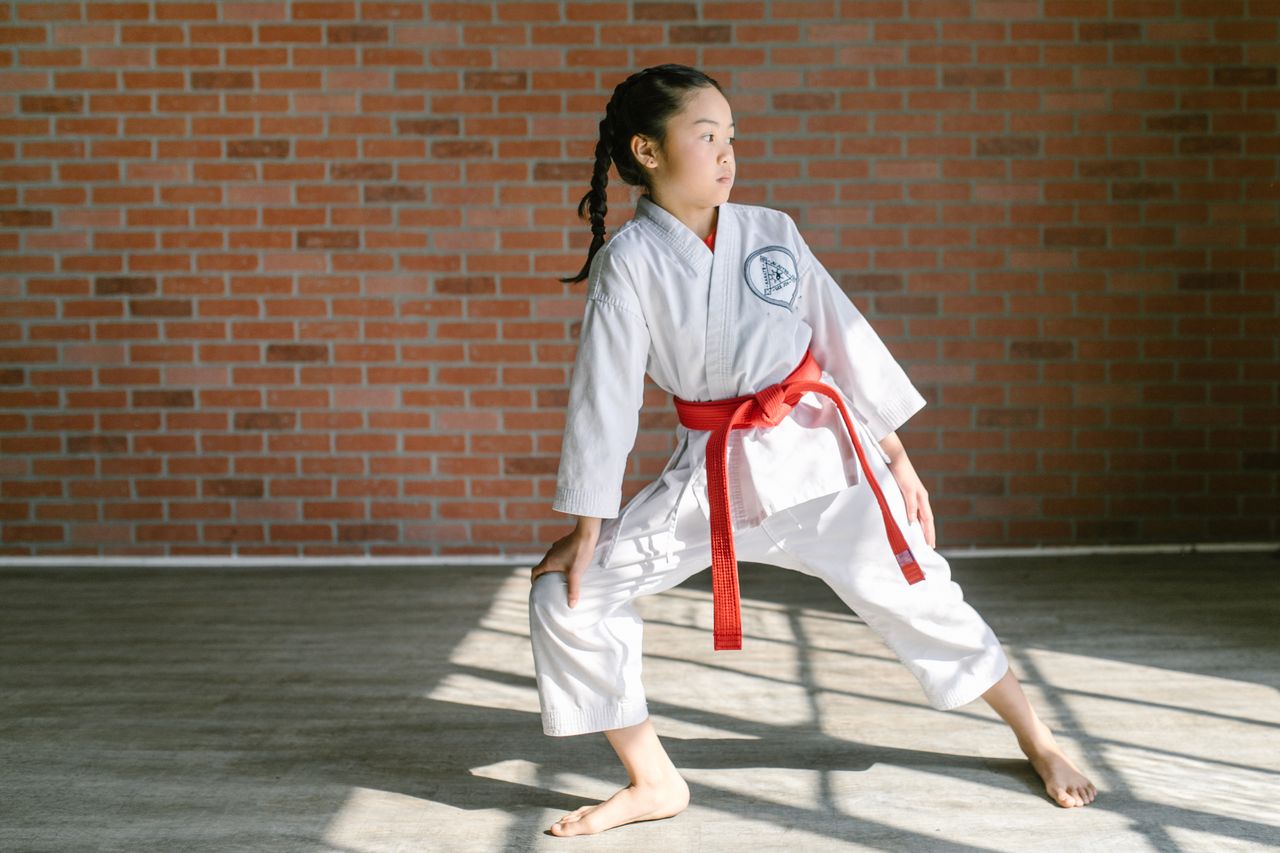
What Gives Martial Arts Schools a Marketing Head Start
A few traits set martial arts apart from other local businesses, and they shape the rest of this guide. These strengths shape every tactic in this guide.
1. Belts turn progress into something people can see
A belt system turns months of training into milestones that parents, grandparents, and friends can recognize at a glance. Each promotion is a reason to celebrate, take a photo, and tell someone. That visible progress is hard to copy for activities without a ranking system, and it gives you a steady stream of shareable moments. If you are still building your ranks, our martial arts belt system guide covers structure, progression, and tracking.
2. Parents are buying outcomes, not classes
A parent signing a child up for martial arts is rarely buying kicks and punches. They are buying confidence, discipline, focus, fitness, and the ability to stand up for themselves. Marketing that speaks to those outcomes converts better than marketing that lists class times and prices. A short story about a shy student who found their voice does more than a paragraph about your curriculum.

3. Kids, teens, and adults each open a different door
Most schools teach kids, teens, and adults, and many add family classes, self-defense workshops, and camps. Each is a separate door for a new family, and each speaks to a slightly different audience. That range gives you more angles to market than a single-format program has.
Zero-Cost and Low-Effort Ways to Get Students
These tactics cost mostly time. Work through them before spending anything on advertising.
1. Make your Google Business Profile your first priority
When a parent searches "kids karate near me" or "martial arts classes [city name]," the map results at the top of the page are driven largely by Google Business Profile data. A complete profile includes your school name, address, phone number, website, hours, correct service categories, photos of your training floor, and at least 15 reviews. Schools with incomplete profiles rank lower and convert fewer views into inquiries.
The fastest way to build reviews is to ask directly. A personal message from the head instructor to your 15 or 20 most engaged families gets a far better response than a mass email. Keep it short: "We're working on building our Google presence, and a review would help other families find us." Do not offer discounts or gifts in exchange for reviews. Google prohibits it and can remove reviews that appear incentivized.

2. Build a referral habit with every family
Referrals from current families are the highest-converting leads a martial arts school can get. A referred family already trusts your school before the first class, knows someone in your community, and tends to stay longer than a family that found you through a cold channel.
Most schools never ask. They assume happy parents will refer naturally, and some do, but a direct ask converts far better. Build a simple system with two parts: a personal ask and a small incentive. At the start of each term, send a note from the head instructor: "We're opening spots for the next session and would love more families like yours. If you know someone who might enjoy martial arts, we'd love to meet them." Pair it with an incentive such as a free month, a free uniform, or a belt test fee waived for the referring family. A "bring a friend" week, where every student can invite a guest to class for free, is another low-cost format that fits martial arts well. For a full walkthrough, see our guide to building a referral program for your academy.
3. Share training clips and belt test moments online
Video of students training is among the most shareable content a local business can produce. Parents share clips of a first board break or a new belt with family, and prospective families watch to judge your teaching before they ever visit.
You do not need professional equipment. A phone and decent lighting cover most of what you need. The highest-performing formats for martial arts schools are short training clips, belt promotion moments, before-and-after progression videos, and quick technique tips from your instructors. Post consistently instead of perfectly. Three short videos a week over six months build more local reach than a few polished videos posted sporadically. Tag your location and use local hashtags that pair your city with "karate," "taekwondo," "jiu-jitsu," or the styles you teach.
Get signed media consent from every family at enrollment before you post any footage of students, especially minors. It should be part of your enrollment paperwork.

4. Run a trial class that ends in enrollment
A trial class is the single most effective conversion tool a martial arts school has. A family that steps onto your mat, meets your instructors, and watches their child try a first class is far more likely to enroll than one that only reads your website.
A good trial does more than let people watch. It gets the new student on the floor, shows them what a regular class feels like, and ends with a clear next step. Fill the class with games and short drills that keep kids moving, like the ones in our 10 martial arts drills for kids classes. Have enrollment ready at the end of the class so a family can register, sign the waiver, and pay for their first billing period before leaving. Classcard's online enrollment flow works on a phone or tablet, so that can happen at your front desk in a few minutes.
If you offer an introductory deal, structure it as a trial period, such as two weeks or a short intro package, rather than a deep discount on ongoing tuition. A trial lets families experience your coaching. A heavy discount tends to attract families who leave when the price goes up. Our martial arts school pricing guide covers how to set intro offers without undercutting your regular rates.
5. Host a free workshop for your community
Free workshops position your school as a local expert and put you in front of families who are not yet looking for classes. Topics that work well include anti-bullying and confidence workshops for kids, women's self-defense, and "intro to martial arts" sessions for adults.
Partner with the places where those families already gather. Elementary schools, PTAs, daycares, community centers, libraries, and youth groups are often open to hosting a free session, because it gives their families something useful at no cost. Bring a sign-up sheet or a QR code that leads to a trial class, and follow up with every attendee within a day.
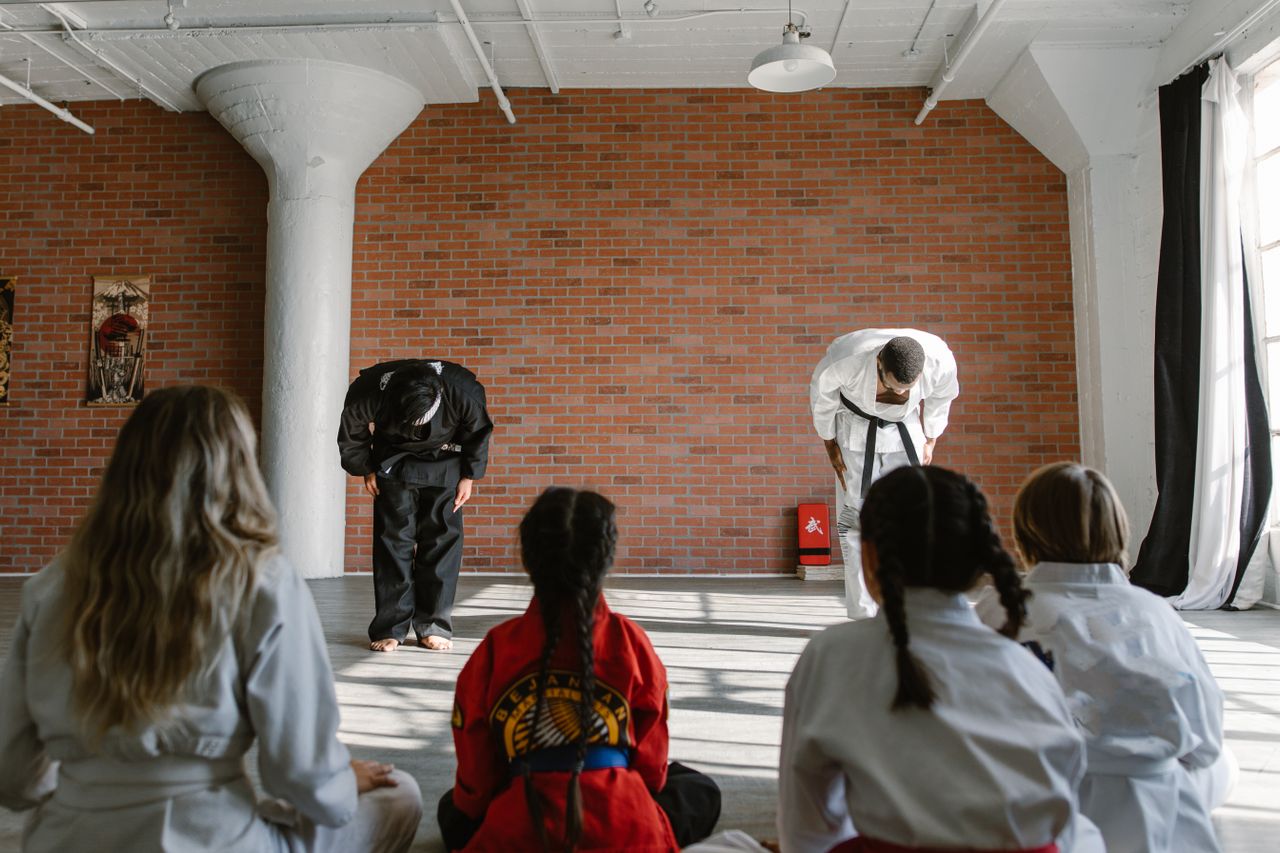
6. Open your belt tests and demos to guests
Belt promotions and demonstrations do two jobs at once: they reward your current students and they show prospective families what your school is like. Invite every enrolled family to bring a friend or relative who does not currently train. Keep the event short, end it with a simple invitation to book a trial class, and have a table with schedules and sign-up information near the exit.
A promotion ceremony where students are recognized in front of their community is one of the most persuasive things a prospective parent can watch. It shows them exactly what their child could gain.
Smart Spends When You're Ready to Invest
Once your free channels are running consistently, these tactics are worth the money.
1. Use camps to feed your regular classes
Camps bring in revenue and double as an enrollment pipeline. Many families who are curious about martial arts but not ready to commit to a full term will try a week-long camp first. A child who has a great camp week and asks to keep going is a warm lead for regular classes.
Design your camp with that in mind. Give campers and parents an explicit invitation to enroll before the week ends, and have information about regular classes available throughout. Our guide to summer camp registration covers how to fill every spot.
2. Test local social ads within a short drive
Once your website clearly shows what you offer and how to enroll, paid social ads can speed up growth at a manageable cost. The most cost-effective setup for a martial arts school is a geographic radius campaign aimed at parents within a 10 to 15 minute drive. A budget of $200 to $300 per month is enough to generate meaningful visibility in most local markets.
Use your best-performing organic video as the ad creative. Ads that look like real class footage tend to perform better than ads that look like promotions. Concentrate your spend on the windows when families are choosing activities: late August into September, and January, when new-year resolutions and fresh starts send people looking for something new. A smaller maintenance budget between those windows keeps your school top of mind. Our back-to-school marketing guide covers the fall window in more detail.
3. Put one great video on your website
Most martial arts websites undersell what the school feels like. A one-to-two minute video that shows your training floor, your instructors working with students, and a class in action does more to turn a browsing parent into an inquiry than any amount of copy. For ideas on what the rest of the page should do, see our guide to building an academy website that converts.
A professional local videographer typically charges between $500 and $1,500 for a small business shoot. That is a one-time cost that can keep working for two to three years. If it is out of reach right now, a well-lit, well-edited phone video shot during a class is much better than no video.
4. Build an email list and follow up fast
Many schools lose students not because families lost interest but because nobody followed up. Every inquiry, trial attendee, and enrolled family should be on an email list from the start. A monthly email covering schedule changes, belt promotions, upcoming events, and tips for practicing at home is enough to stay top of mind. A free or low-cost email tool covers the needs of most small schools.
Follow up with every inquiry within 24 hours, and again after a trial class. Our complete guide to lead management for academies shows how to track leads from first inquiry to enrollment without losing anyone along the way.
Keep the Students You Have: Retention as Marketing
Keeping students is the marketing lever schools overlook most. When nine in ten students stay from one year to the next, a school can grow with very little acquisition spending. When only six in ten stay, every new sign-up just replaces someone who left.
Retention in martial arts comes down to three things: visible progress tied to belts and milestones, a community students feel part of, and communication that keeps families informed between classes. None of these are marketing line items. They are coaching and operations decisions that happen to have a large marketing effect.
Practical retention tools include automated billing that runs without friction, recognition when a student earns a stripe or belt, and a quick follow-up when a student misses class. When a family feels your school notices their child, they are far less likely to quietly drift away. Our guide to 10 proven strategies to retain students goes deeper, and our tips on reducing no-shows help you keep attendance high.
Platforms like Classcard handle the communication layer: automated reminders, billing, and progress updates all run in the background. At $99/month flat for the full platform, the cost is covered by a single referred student.

A 30-Day Marketing Starter Plan
Whether you're launching a school or restarting stalled marketing, work through these steps in order.
Week 1
- Claim and fully complete your Google Business Profile with photos, hours, class schedule, and website link
- Send a personal review request to your 15 most engaged families
- Audit your website to confirm it loads on mobile, shows your schedule, and has a clear inquiry form
Week 2
- Send your first referral ask to enrolled families with a simple incentive
- Post three training or belt promotion clips to Instagram or TikTok
- Contact two local schools or daycares about hosting a free workshop
Week 3
- Set up an email list and add every enrolled family, former student, and inquiry lead
- Set a date for a trial class, bring-a-friend week, or belt test open to guests in the next four to six weeks
- Write and schedule your first monthly parent email
Week 4
- Promote your event through every channel you have set up
- Confirm that new families can register, sign waivers, and pay online without staff help, instead of juggling Google Forms and WhatsApp
- Set a recurring reminder to post social content three times a week and send a monthly email
You won't need an ad budget for any of this. Do all of it consistently for 90 days and you will see more enrollment than ads would deliver without these foundations underneath.

Marketing a martial arts school on a budget comes down to using what you already have: your students' visible progress, your families' goodwill, and your local reputation. Start with your Google Business Profile, referrals, and a trial class that ends in enrollment. Add paid channels only once those foundations are working, and put real effort into keeping the students you win. Do that consistently and your mats will fill without a big ad budget.
Want to see how Classcard works for a martial arts school? Book a free demo or try Classcard free for 7 days to manage enrollment, trials, billing, and parent communication in one place.
Frequently Asked Questions
How much should a martial arts school budget for marketing?
A common benchmark is 5 to 10 percent of monthly revenue. For a school earning $12,000 per month, that is $600 to $1,200 per month. The money goes furthest when it is concentrated on a few high-return channels, such as local social ads and a single website video, instead of spread thinly across many platforms. Before you spend on paid ads, make sure your free channels are set up and your website turns visitors into inquiries.
How can you get more martial arts students without paid ads?
The most effective free methods are a complete Google Business Profile with strong reviews, a structured referral program, and a well-run trial class. These three work together: Google brings in parents who are searching, referrals bring in families who already trust you, and the trial class converts both groups. Community workshops and belt test events add visibility without any ad spend.
Do social media posts really bring in new students?
It does, but the mechanism matters. Organic social media mostly keeps your school top of mind for people who already know you, such as past inquiries, former students, and friends of current families. It rarely converts someone who has never heard of you. Consistent posting is more about reinforcing the decision of families who are already interested. Paid social with geographic targeting is better for reaching families who are new to your school.
What do parents look for when choosing a martial arts school?
Parents decide based on three things: whether the school feels safe and professional, whether the teaching quality is visible, and whether their child will enjoy the community. Marketing that speaks to those concerns converts better than marketing built around price or class variety. Parent testimonials, video of real classes, and a clear explanation of your curriculum and values persuade more than discounts. Focus on outcomes such as confidence, focus, and discipline.
Are free trials better than discounts for martial arts schools?
A free or low-cost trial is usually the better choice. It lets families experience your coaching before committing, and families who enroll after a trial tend to stay longer than those who enrolled for a discount. If you run an introductory offer, structure it as a short trial period instead of a percentage off ongoing tuition, so that your regular pricing stays intact.
How do you attract adult students to a martial arts school?
Adults respond to different messages than parents do. Fitness, stress relief, self-defense, and the chance to learn a new skill are the most common motivations, and many adults worry they are too old or out of shape to start. Address those concerns directly with beginner-friendly adult classes, an intro workshop, and testimonials from adults who started late. Your Google Business Profile, a dedicated adult page on your website, and local ads aimed at adults all help reach this audience.